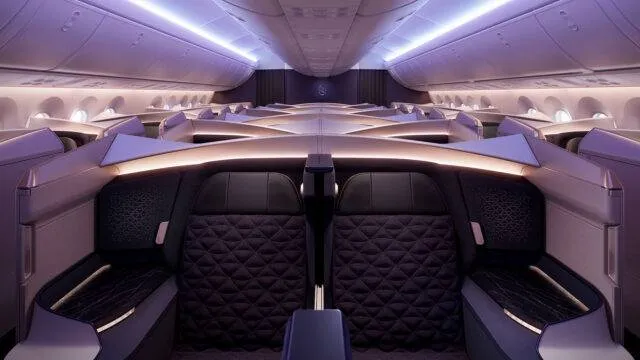
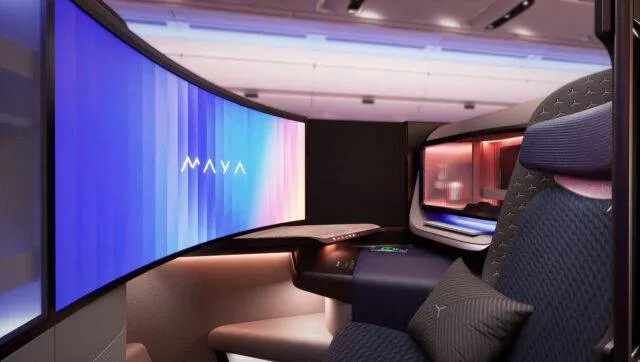
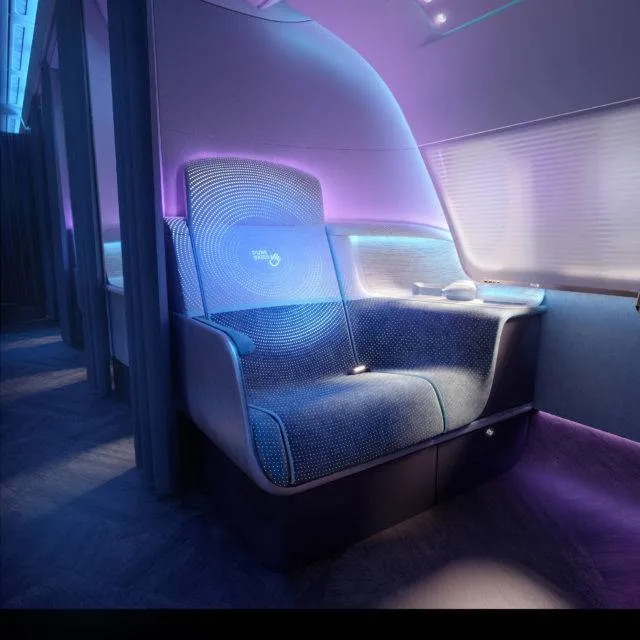
Ways of Seeing (观 Guān) reimagines business aviation as a space for multi-generational travel, bringing together grandparents, parents and children in a cabin designed around how they live, work and spend time together. Grounded in cultural research, the concept combines private spaces for rest and wellbeing with a shared lounge and dining environment that adapts to different moments of the journey.

Challenge

Business aviation has traditionally been designed around the needs of a single principal. But PriestmanGoode’s research found a clear shift towards multi-generational travel among Chinese entrepreneurs and their families travelling and spending time together.

The challenge was to move business aviation beyond a tool just for business and create a space where work, family and wellbeing could coexist — grounded in a genuine understanding of the people it is designed for.
Solution

Ways of Seeing / 观 Guān reimagines business aviation as a space built for family across generations.

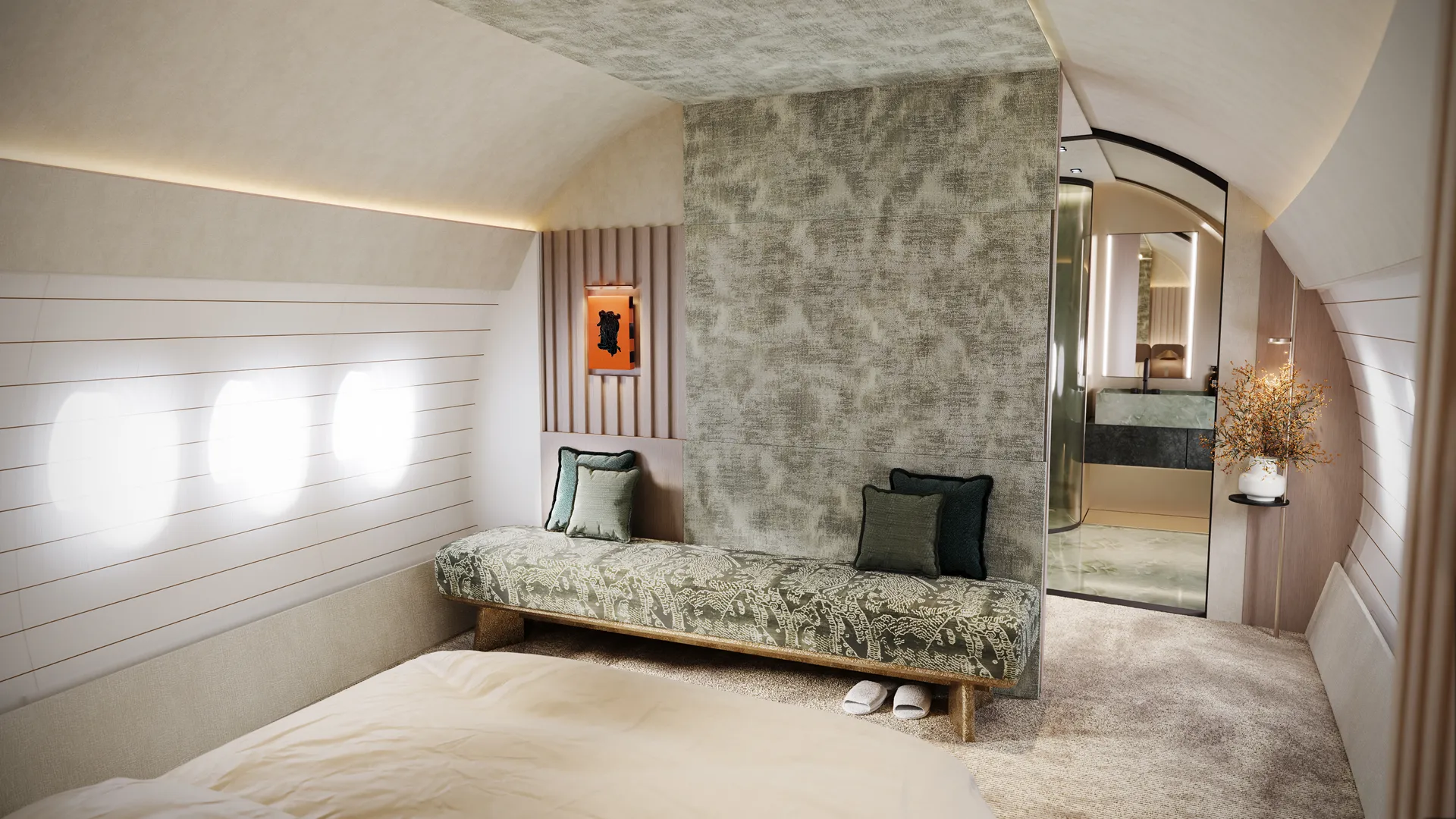
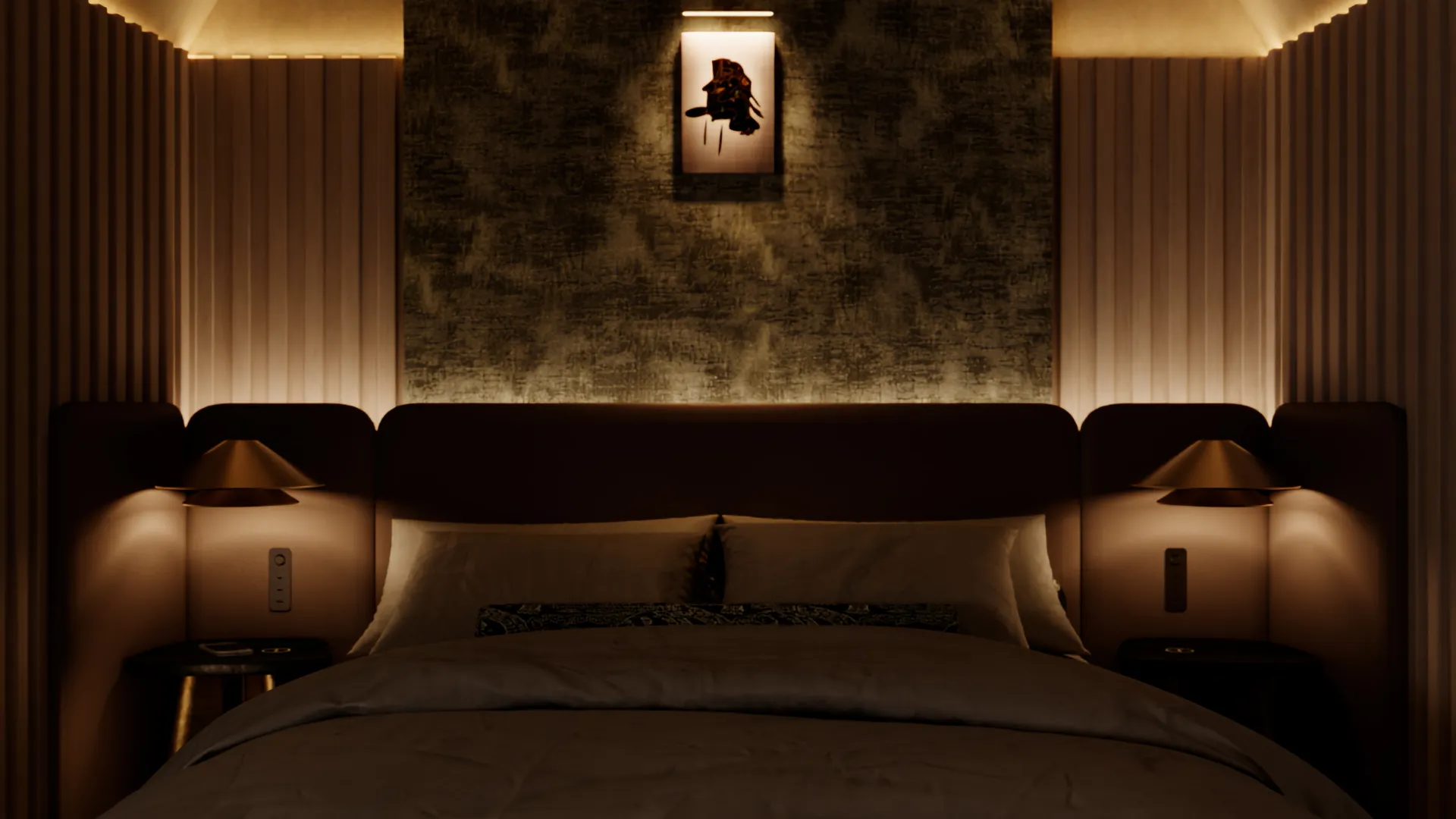
At the rear of the cabin, a private retreat holds a bedroom, en-suite and a study that reads as an office by day and slips into a wellbeing space for meditation, exercise or simply quiet by night. A second bedroom sits close by.

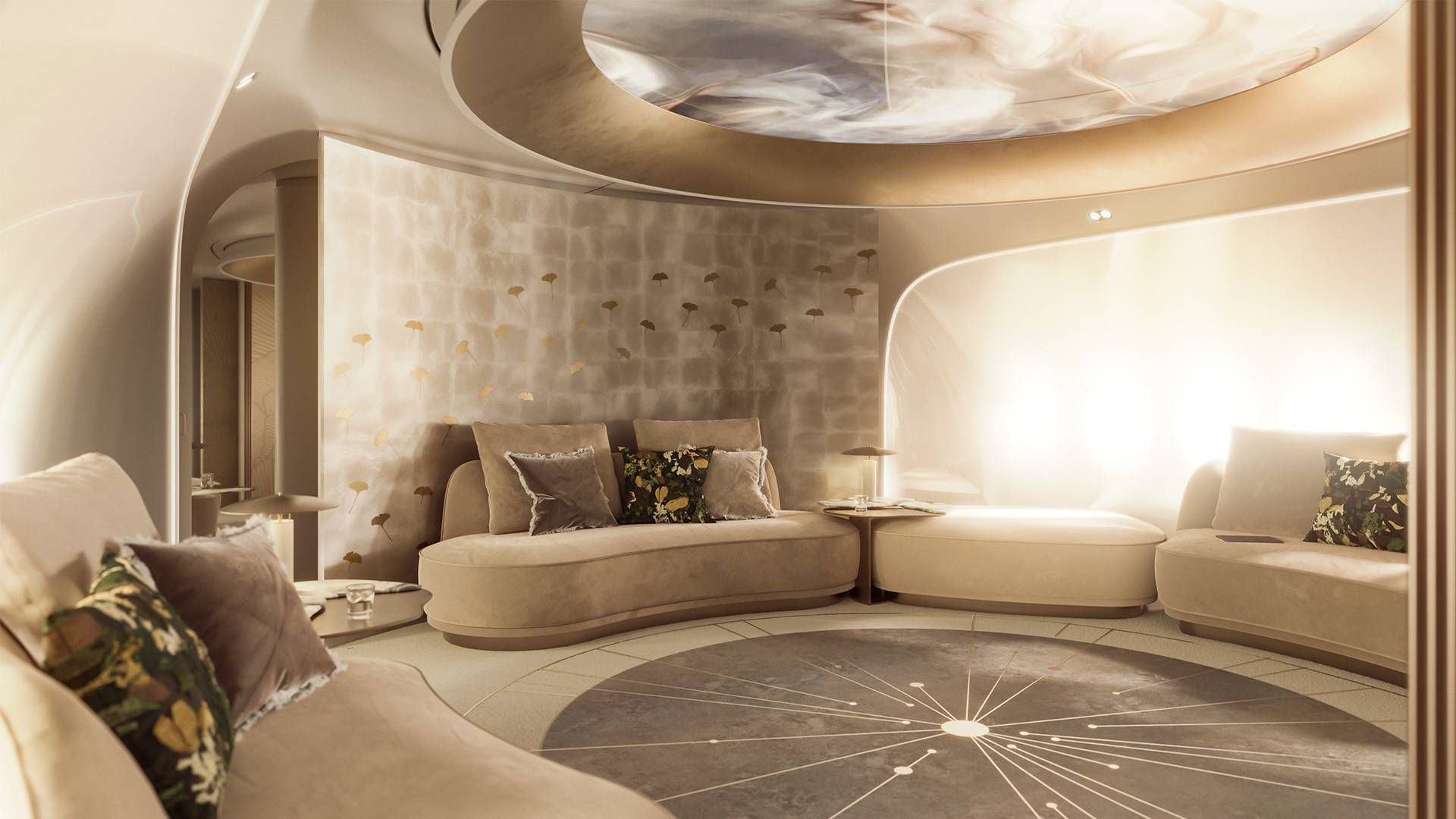
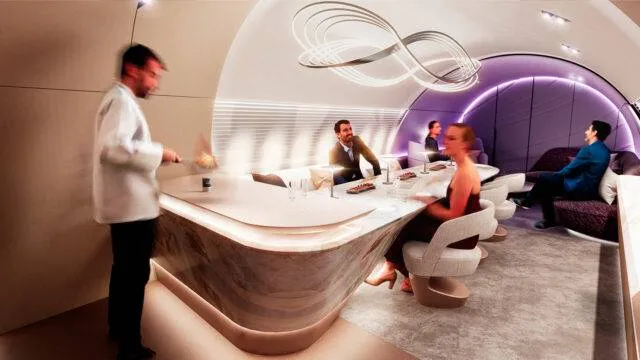
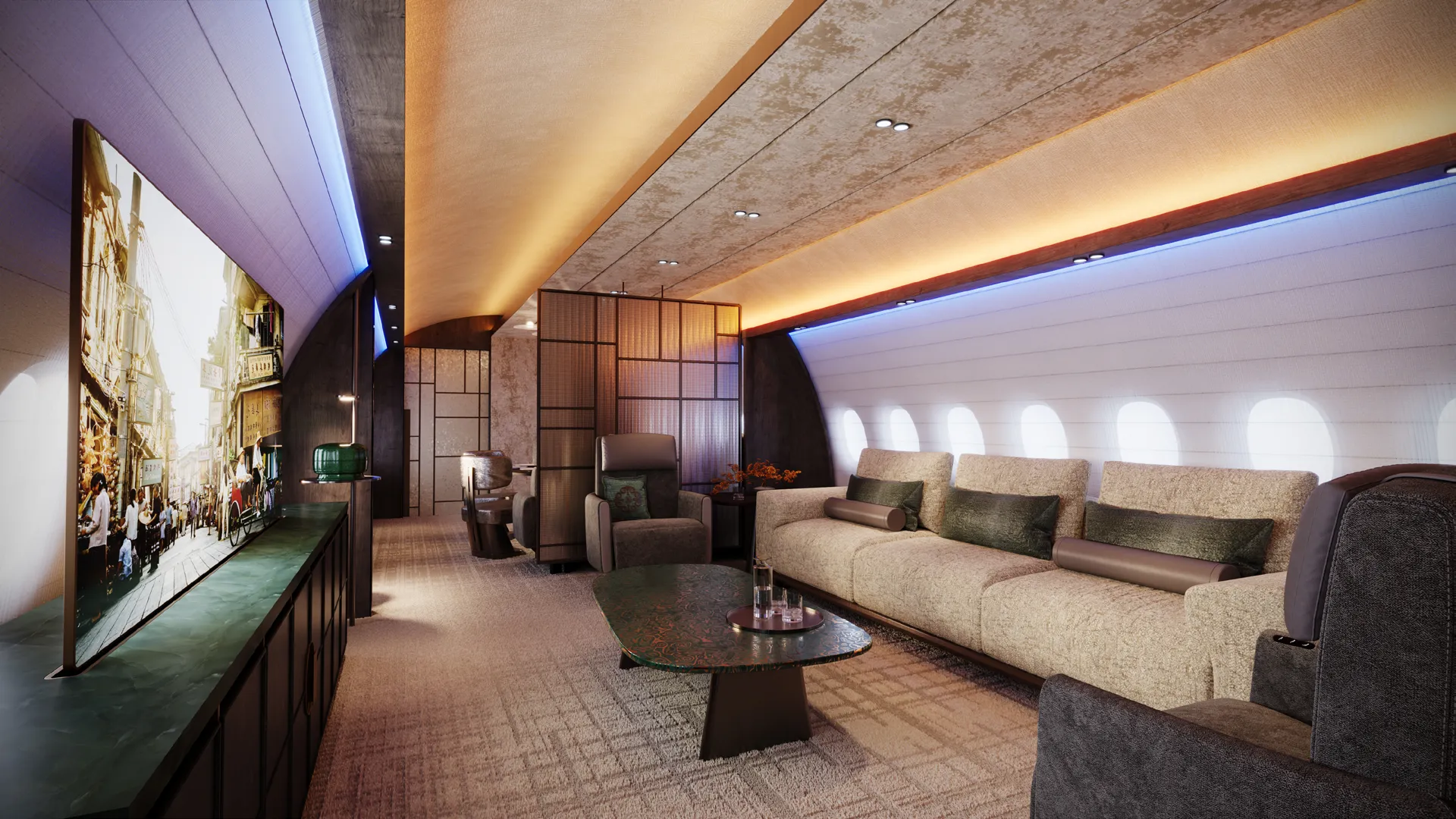
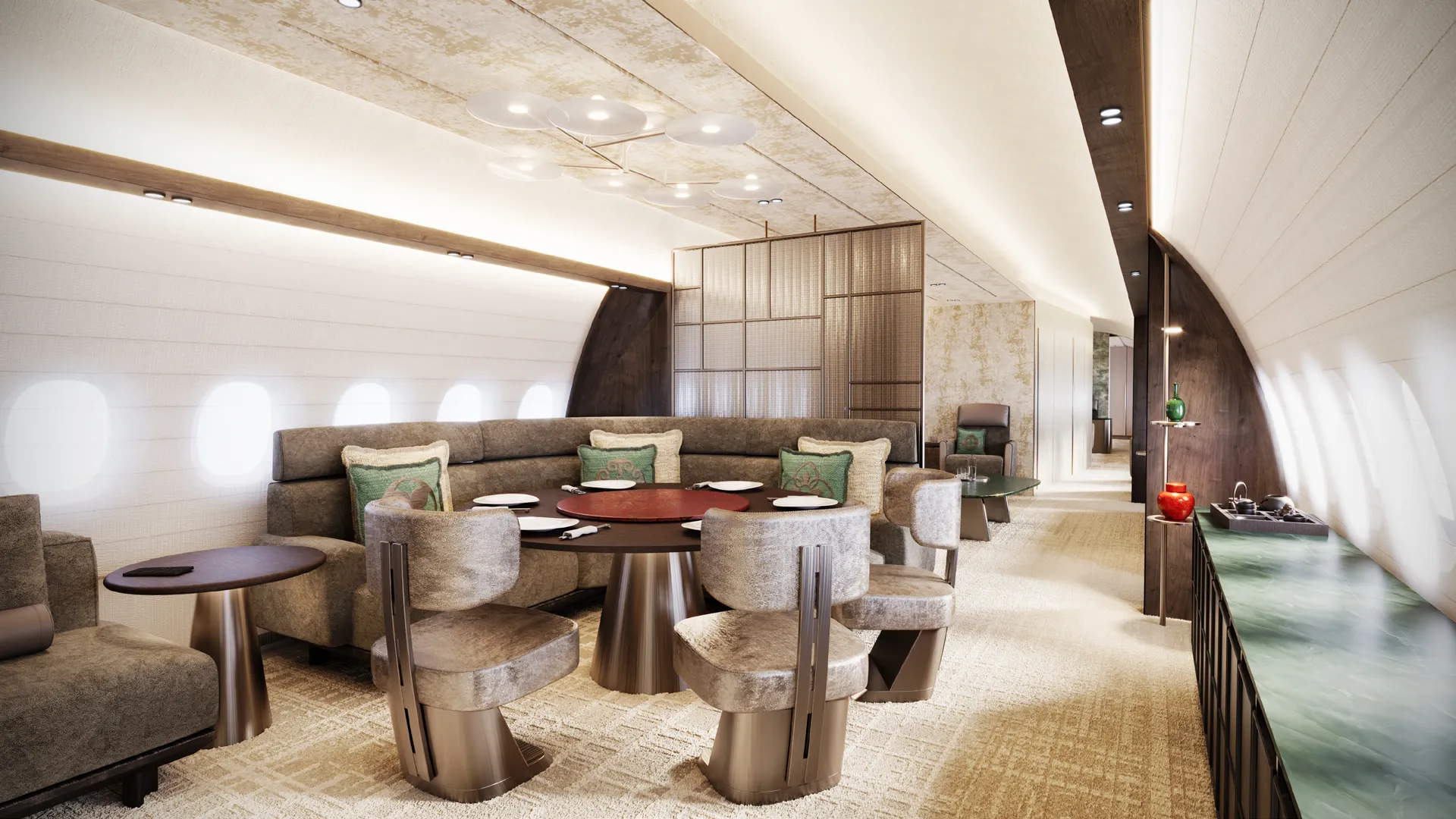
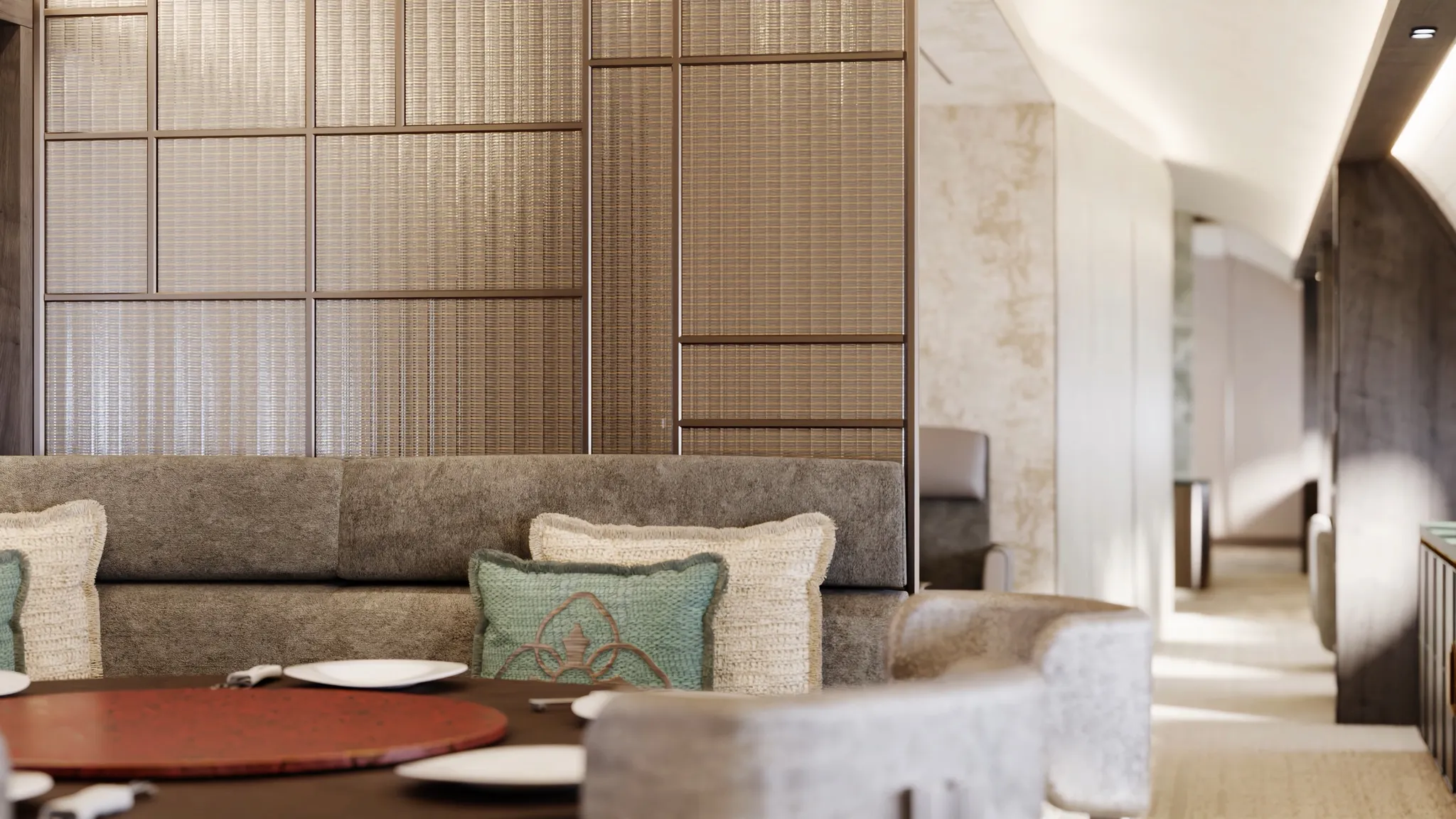
Between them, a shared lounge and dining space does the real work: a circular table set for a formal meal collapses into a smaller table for tea or family bonding games, while a woven metal screen lets the room open and close around whichever gathering the moment calls for.

Modularity runs through the cabin, allowing the spaces to move fluidly between business and family life over the course of a shared journey.

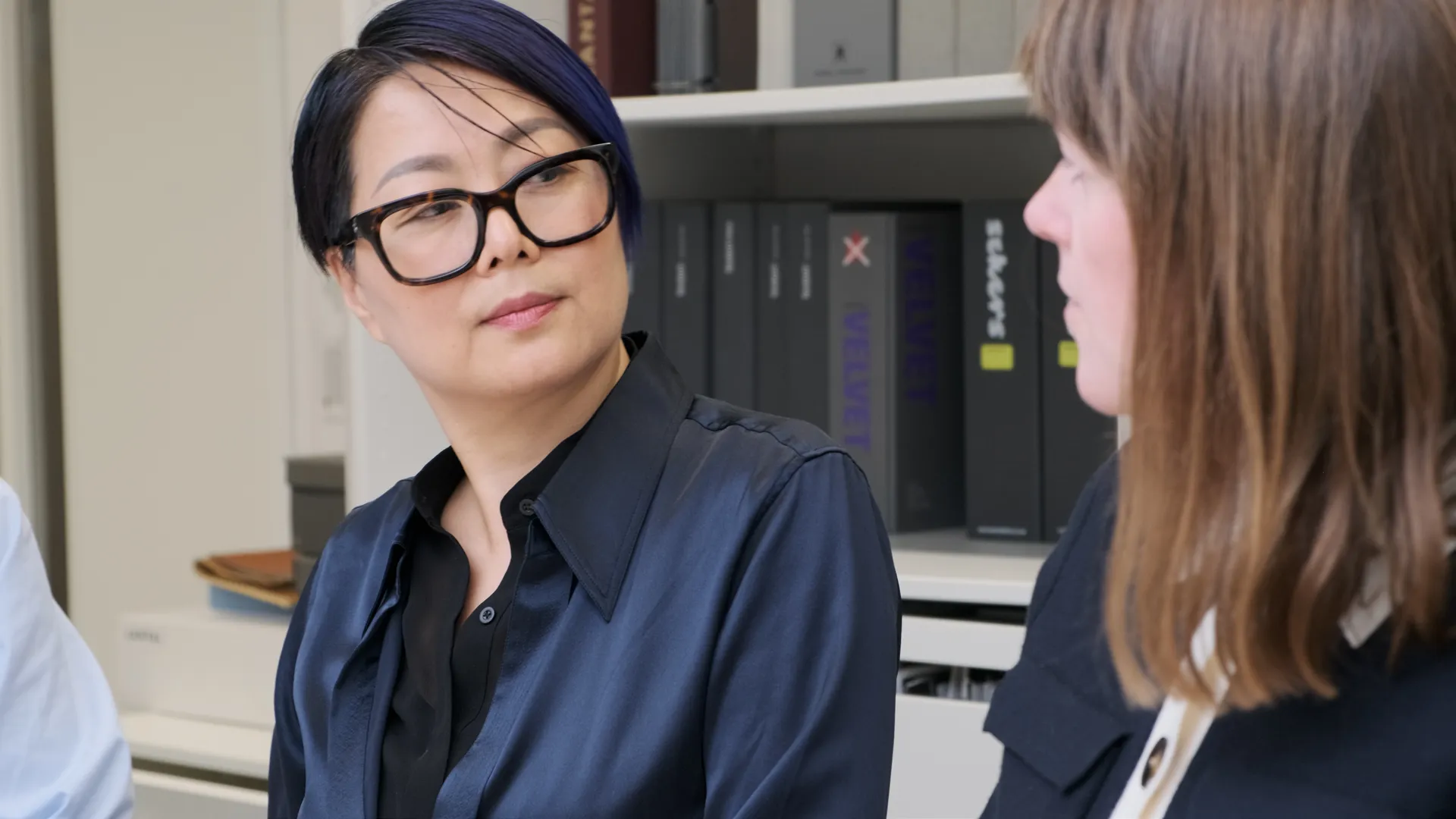
Team members in discussion in the PriestmanGoode studio

Cultural Insight

Built from real cultural research, PriestmanGoode partnered with a China-based cultural consultant whose insight pointed to a clear shift towards multi-generational travel among Chinese entrepreneurs and their families.

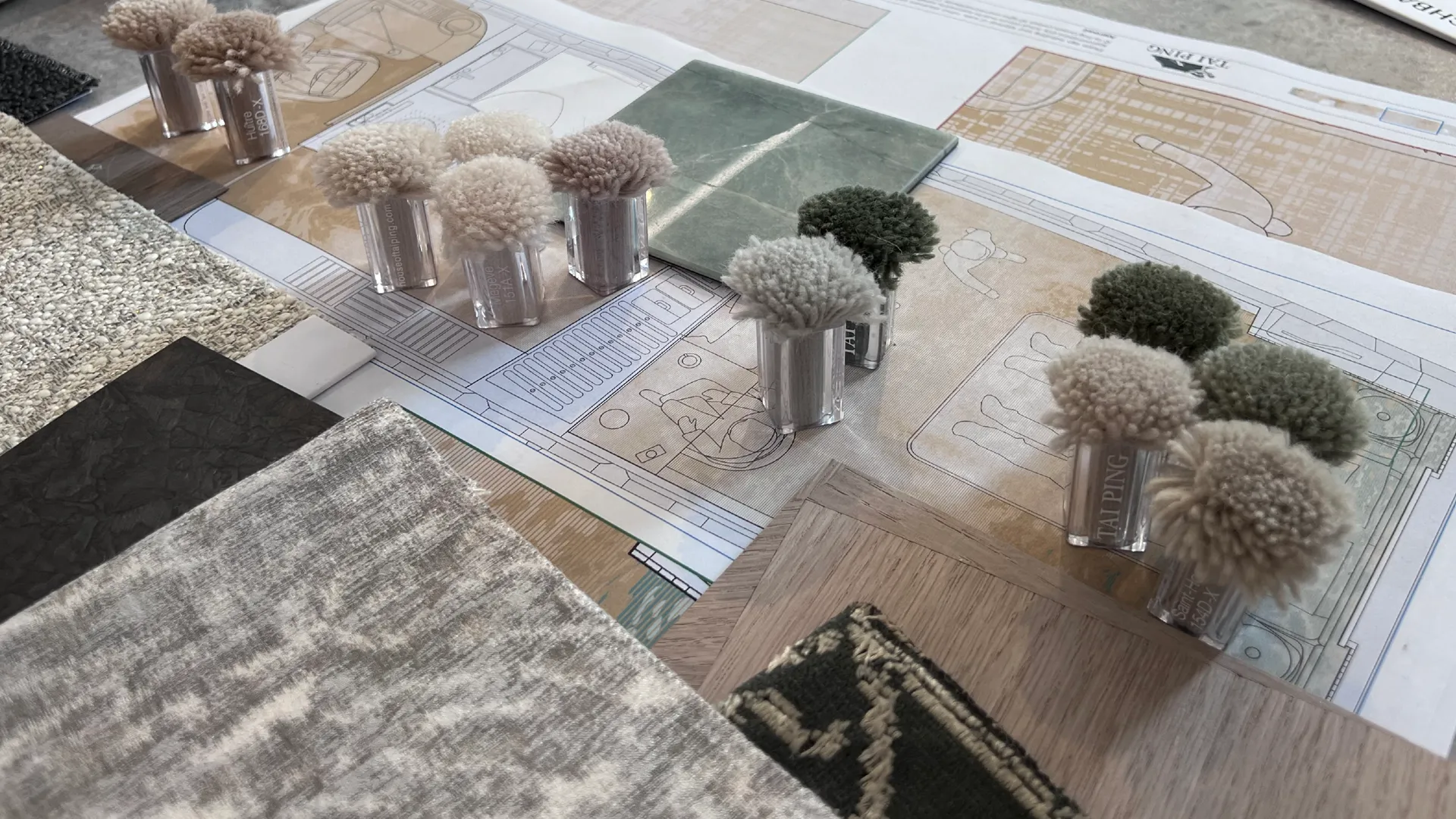
The research also identified a personal style blending tonal hues with a contemporary aesthetic of clean, understated lines and natural materials. Shaping every material choice in the cabin.

The design starts from an honest, well-researched picture of how the Chinese entrepreneur actually lives and travels.

Collaborations

PriestmanGoode’s central craft collaborations with Tai Ping and The Gallery by SOIL, alongside its close partnership with the cultural consultant, brought genuine cultural understanding and insight to the cabin.

Tai Ping

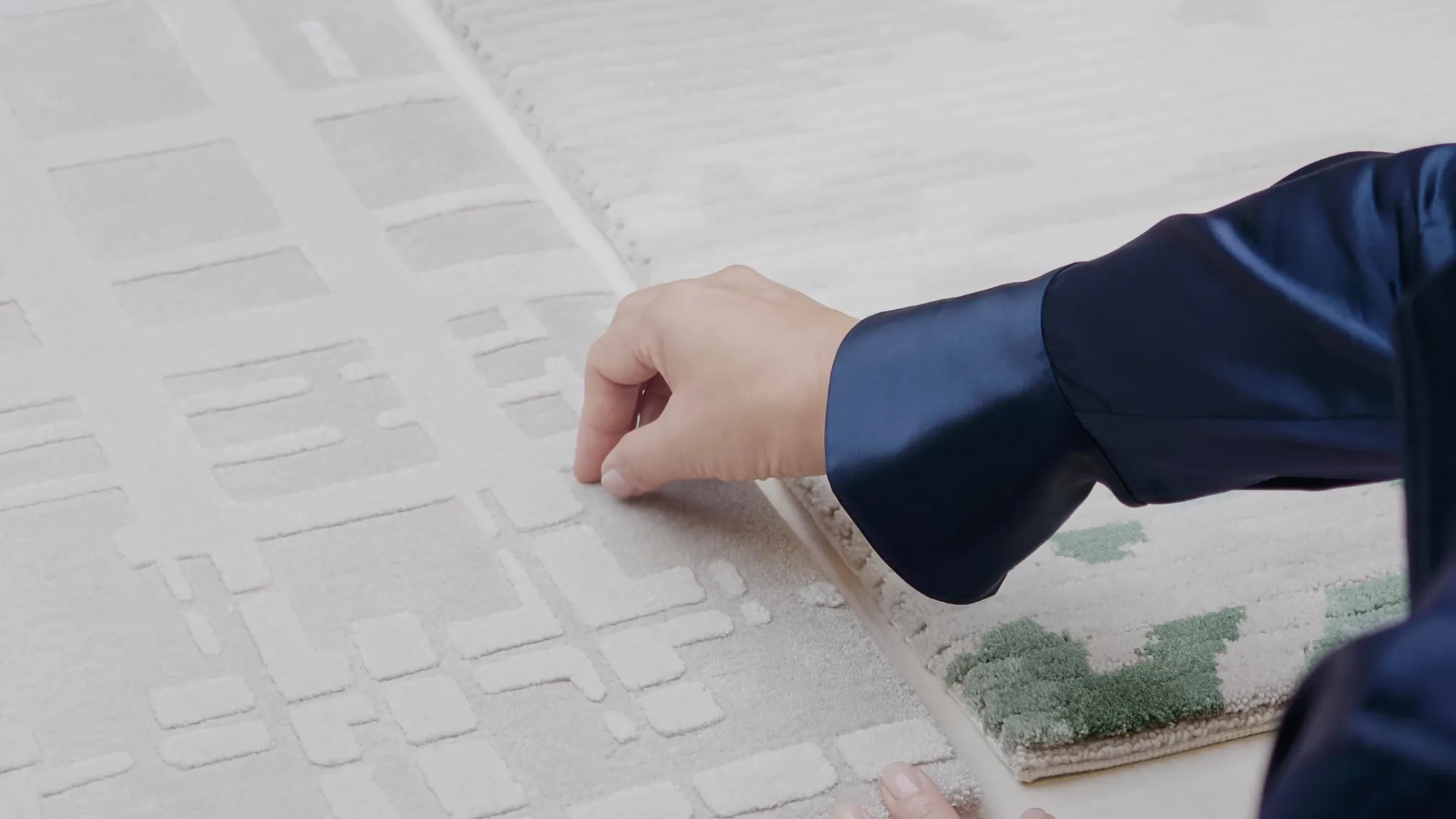
The bespoke carpet was developed hand in hand with Tai Ping’s team, drawing on traditional geometric motifs rooted in Chinese culture that evolve into more organic, landscape-inspired forms. The shared areas carry a design by Andre Fu, while the private areas feature a more organic pattern developed in keeping with the consultant’s guidance.

The Gallery by SOIL

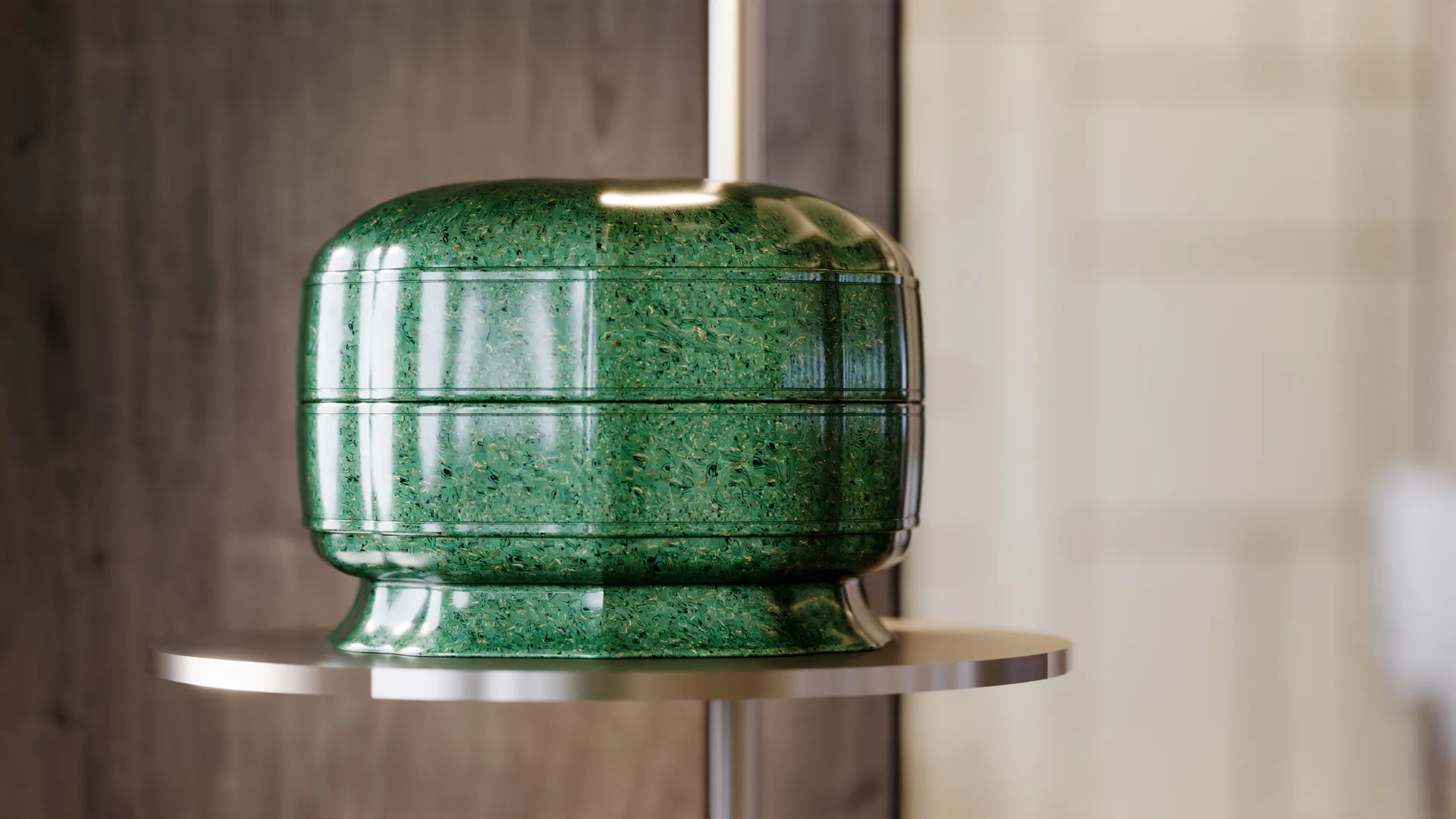
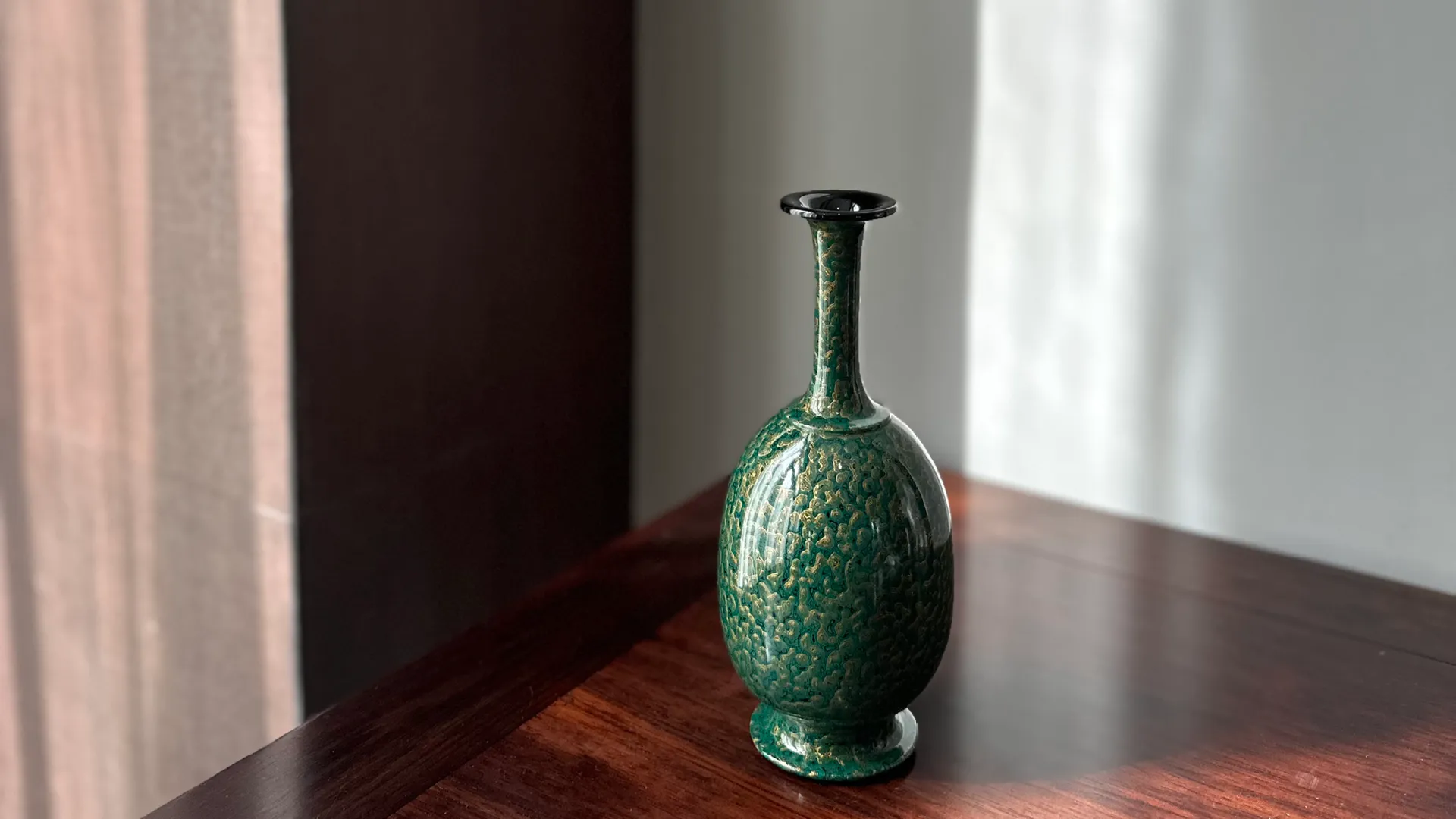
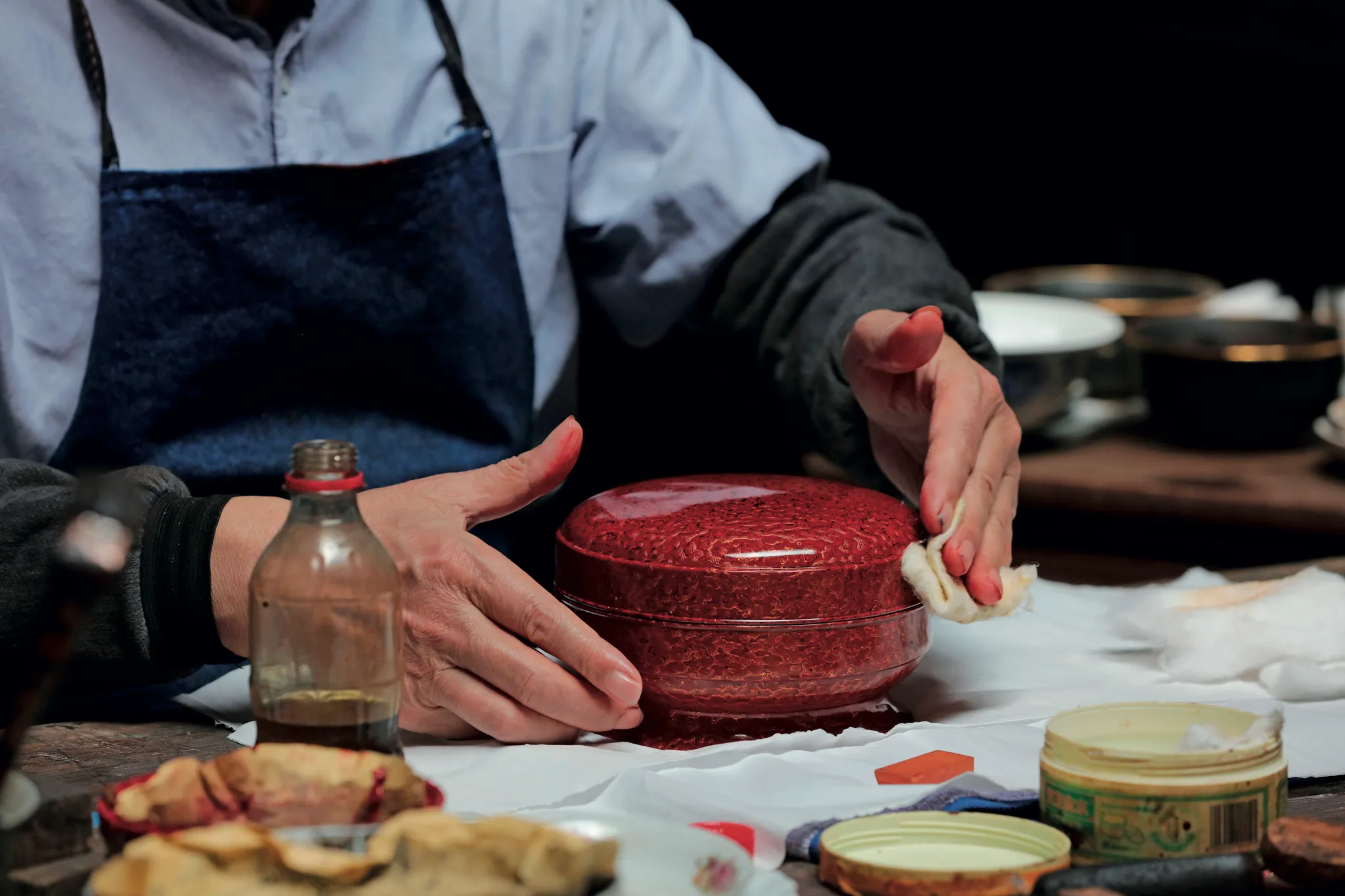
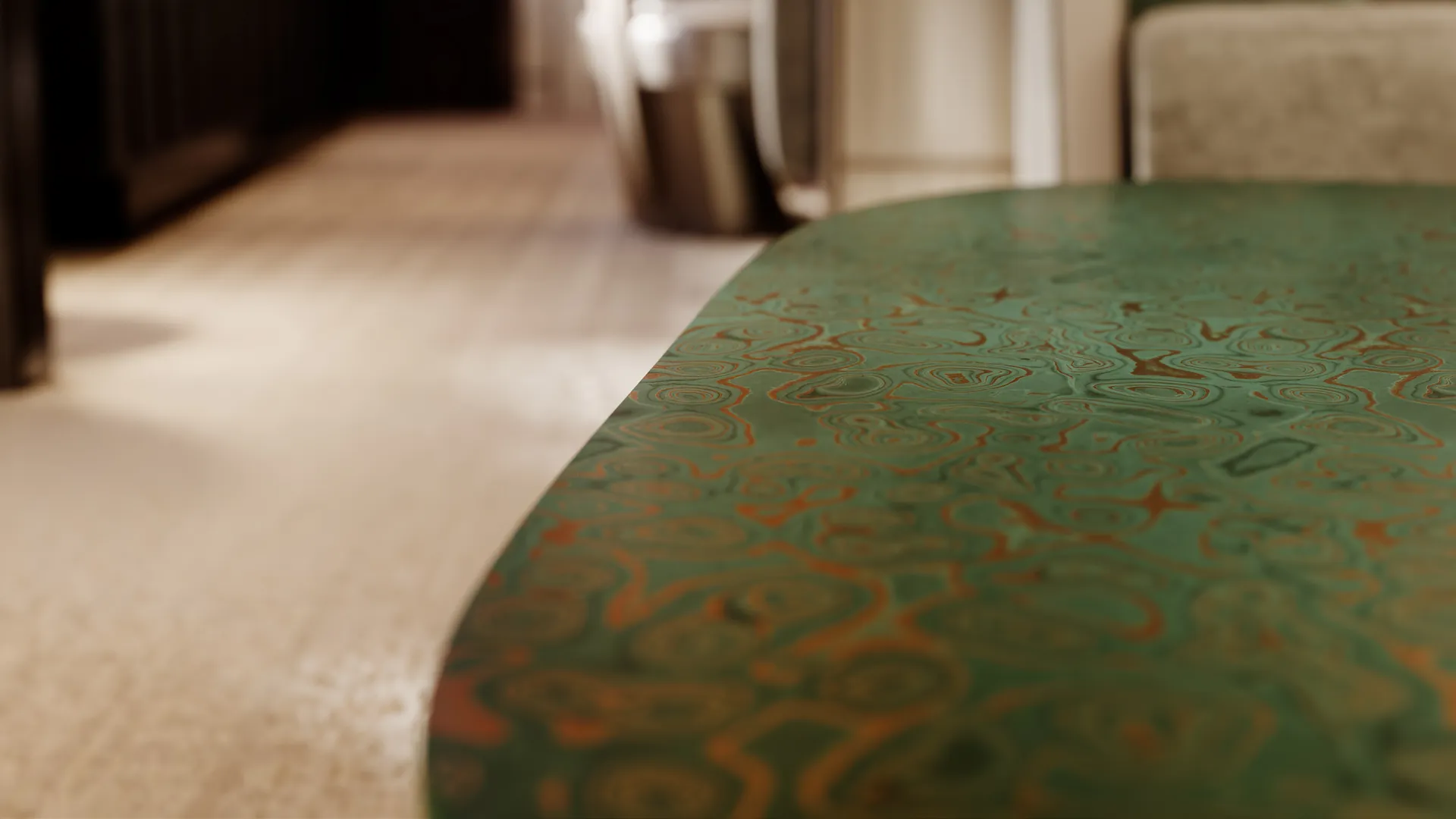
The lacquer art comes from The Gallery by SOIL, a Hong Kong gallery representing Chinese artists working in traditional craft through a contemporary lens. In the shared spaces, work by Gan Erke extends across the coffee table and dining table’s lazy susan, alongside vases and a lacquer box in the main living area.

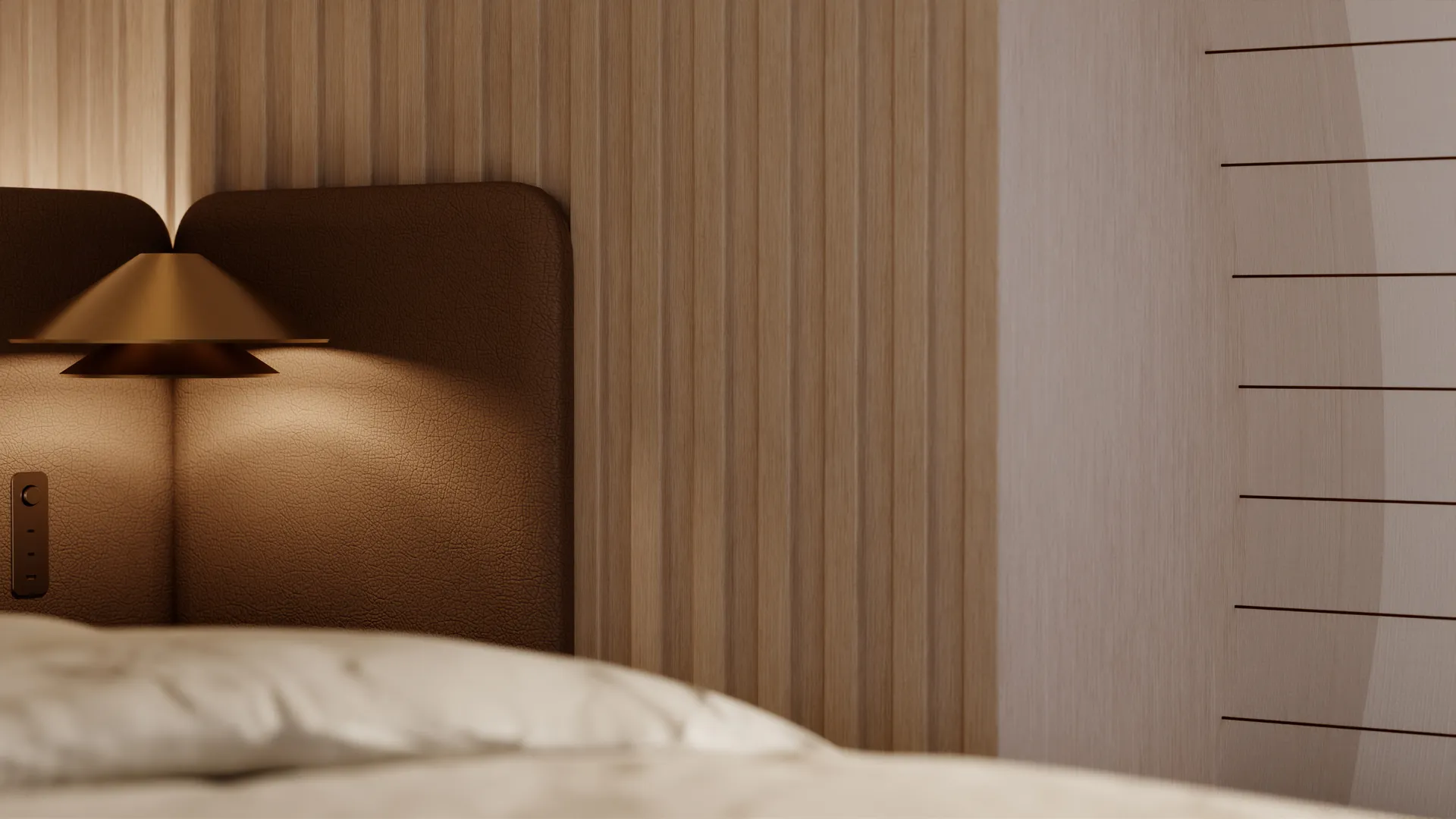
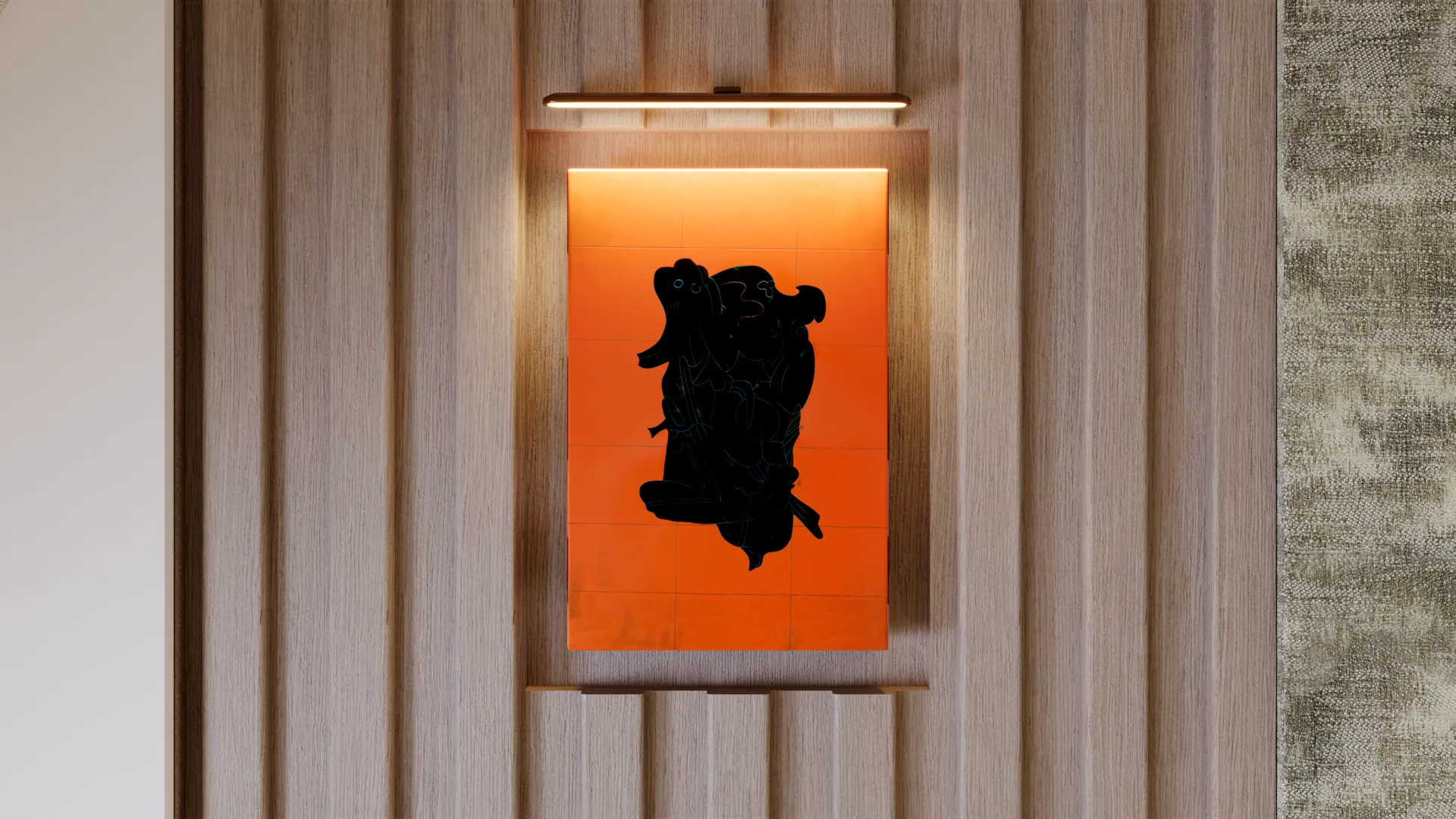
In the private bedroom, a piece by Shi Yuguang, a younger, more contemporary lacquer artist known for his technical skill in shell and eggshell inlay, brings a more expressive register to the space.

Together, these collaborations do more than furnish the cabin: they are proof that the cultural authenticity PriestmanGoode set out to achieve rests on genuine craft authority, not surface styling.

The Detail

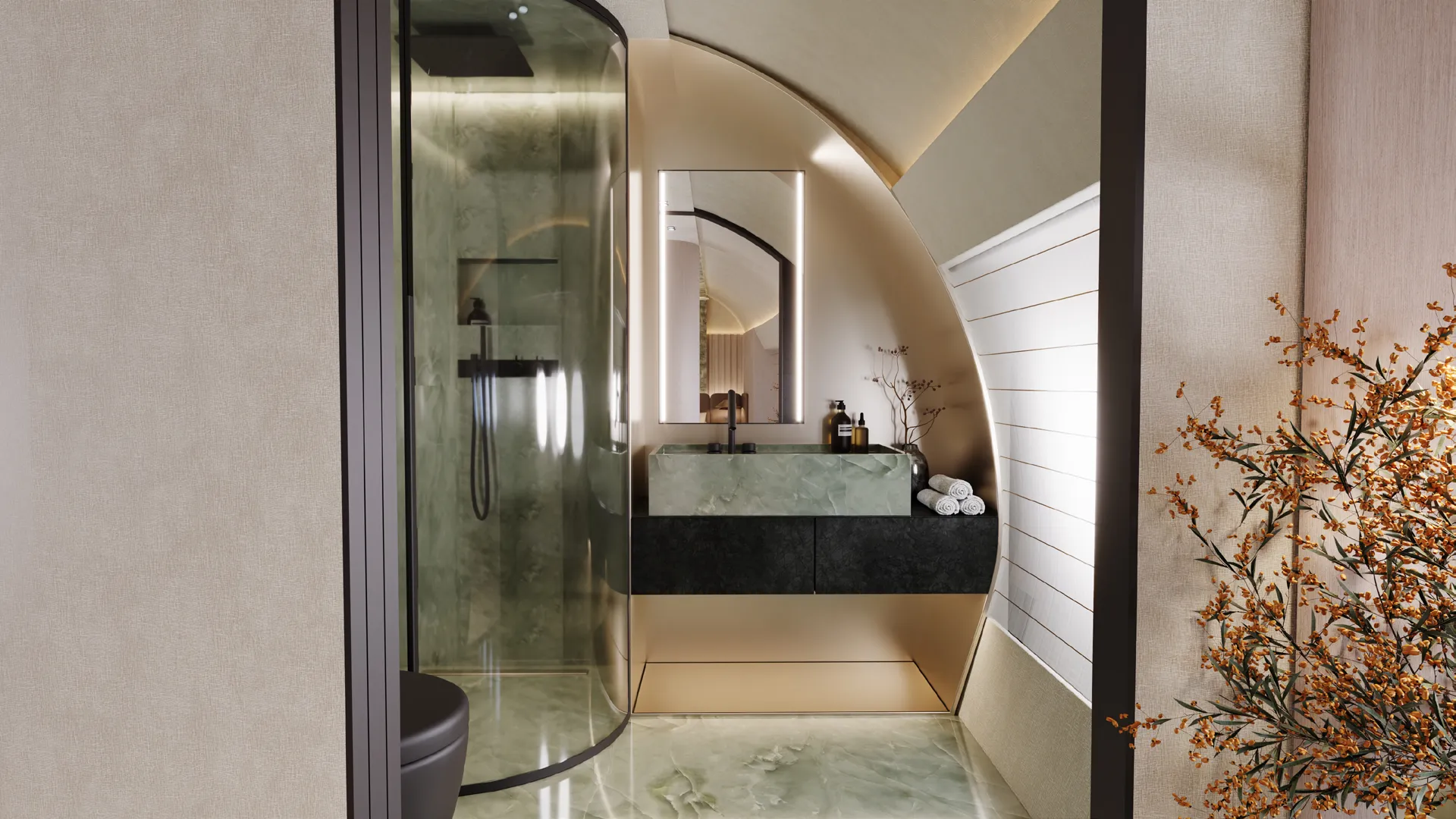
A jade-toned stone veneer, chosen for its embodied virtue and harmony in Chinese culture, runs through the private bathroom and credenza. A green patterned fabric in muted sage and olive tones dresses the bedroom’s day-bed, tying the room back to nature-led, understated contemporary Eastern aesthetics.

The technology stays out of sight until it is needed. Voice and motion controls bring lighting, screens and speakers to life on command, shifting the mood of the room in an instant — cinematic in the lounge, calibrated to the sleep cycle in the bedroom.

“We didn’t want to design a Chinese-inflected version of an existing template. We wanted to start from an honest, well-researched picture of how a specific person actually lives and travels, and let the cabin follow from that. It’s why the input from our cultural consultant sits at the centre of the brief rather than layered on at the end, and why we didn’t default to a house style: the design has to be driven by the people it’s for.”

Ben Rowan, Director, PriestmanGoode

Let's bring your ideas to life

Ways of Seeing (观 Guān) reimagines business aviation as a space for multi-generational travel, bringing together grandparents, parents and children in a cabin designed around how they live, work and spend time together. Grounded in cultural research, the concept combines private spaces for rest and wellbeing with a shared lounge and dining environment that adapts to different moments of the journey.

Challenge

Business aviation has traditionally been designed around the needs of a single principal. But PriestmanGoode’s research found a clear shift towards multi-generational travel among Chinese entrepreneurs and their families travelling and spending time together.

The challenge was to move business aviation beyond a tool just for business and create a space where work, family and wellbeing could coexist — grounded in a genuine understanding of the people it is designed for.
Solution

Ways of Seeing / 观 Guān reimagines business aviation as a space built for family across generations.

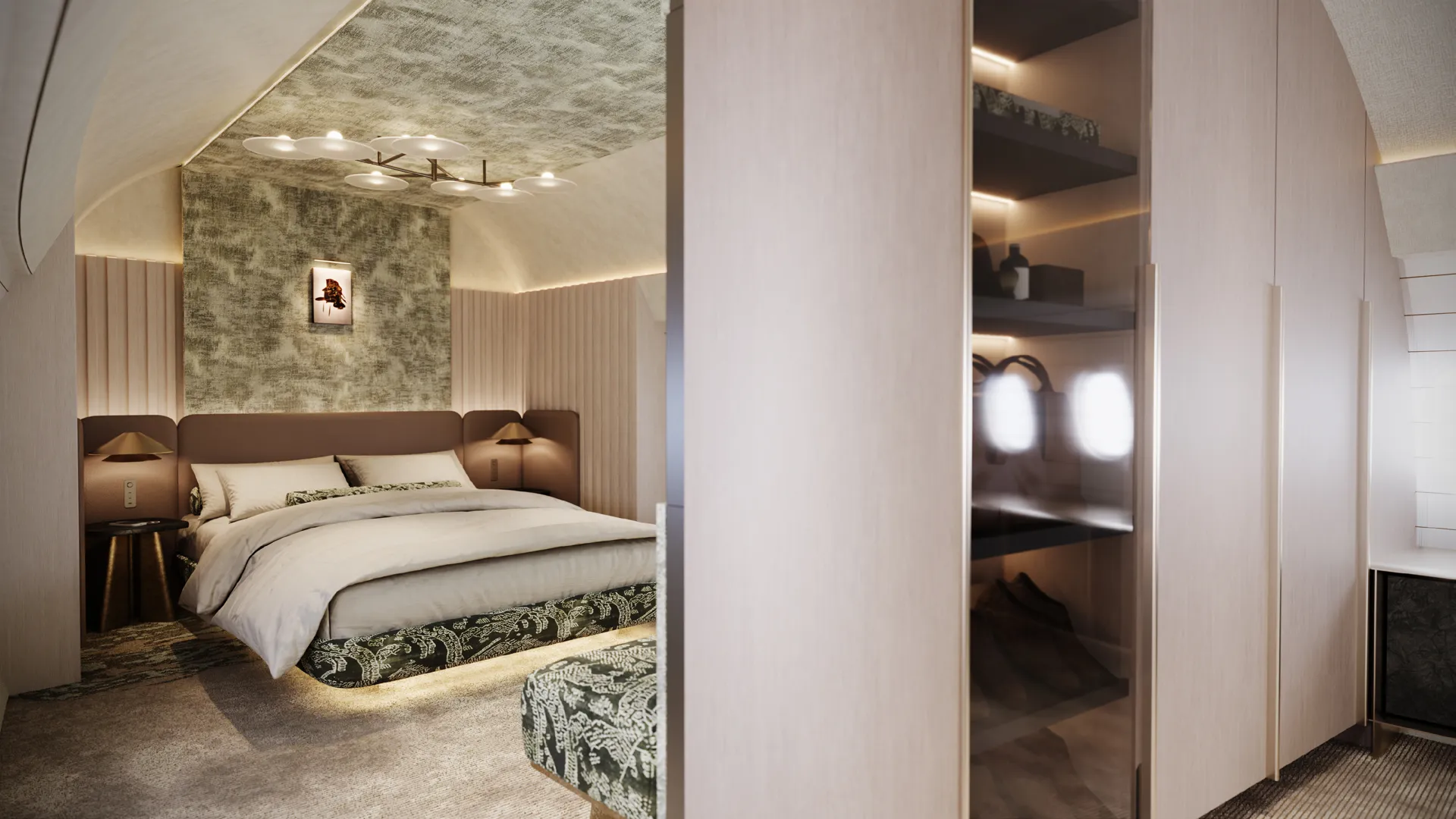
At the rear of the cabin, a private retreat holds a bedroom, en-suite and a study that reads as an office by day and slips into a wellbeing space for meditation, exercise or simply quiet by night. A second bedroom sits close by.

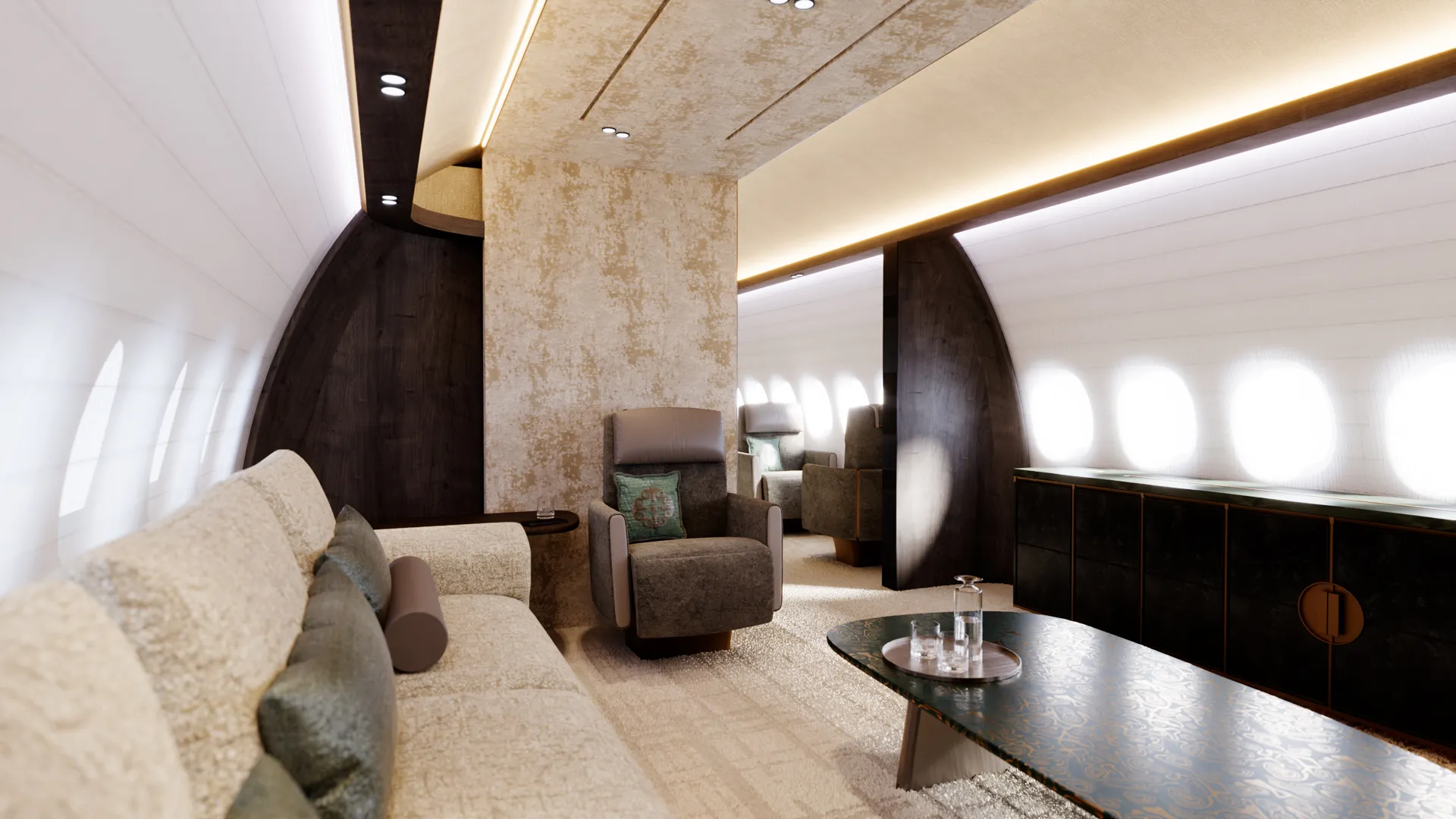
Between them, a shared lounge and dining space does the real work: a circular table set for a formal meal collapses into a smaller table for tea or family bonding games, while a woven metal screen lets the room open and close around whichever gathering the moment calls for.

Modularity runs through the cabin, allowing the spaces to move fluidly between business and family life over the course of a shared journey.
Team members in discussion in the PriestmanGoode studio

Cultural Insight

Built from real cultural research, PriestmanGoode partnered with a China-based cultural consultant whose insight pointed to a clear shift towards multi-generational travel among Chinese entrepreneurs and their families.

The research also identified a personal style blending tonal hues with a contemporary aesthetic of clean, understated lines and natural materials. Shaping every material choice in the cabin.

The design starts from an honest, well-researched picture of how the Chinese entrepreneur actually lives and travels.

Collaborations

PriestmanGoode’s central craft collaborations with Tai Ping and The Gallery by SOIL, alongside its close partnership with the cultural consultant, brought genuine cultural understanding and insight to the cabin.

Tai Ping

The bespoke carpet was developed hand in hand with Tai Ping’s team, drawing on traditional geometric motifs rooted in Chinese culture that evolve into more organic, landscape-inspired forms. The shared areas carry a design by Andre Fu, while the private areas feature a more organic pattern developed in keeping with the consultant’s guidance.
The Gallery by SOIL

The lacquer art comes from The Gallery by SOIL, a Hong Kong gallery representing Chinese artists working in traditional craft through a contemporary lens. In the shared spaces, work by Gan Erke extends across the coffee table and dining table’s lazy susan, alongside vases and a lacquer box in the main living area.

In the private bedroom, a piece by Shi Yuguang, a younger, more contemporary lacquer artist known for his technical skill in shell and eggshell inlay, brings a more expressive register to the space.

Together, these collaborations do more than furnish the cabin: they are proof that the cultural authenticity PriestmanGoode set out to achieve rests on genuine craft authority, not surface styling.
The Detail

A jade-toned stone veneer, chosen for its embodied virtue and harmony in Chinese culture, runs through the private bathroom and credenza. A green patterned fabric in muted sage and olive tones dresses the bedroom’s day-bed, tying the room back to nature-led, understated contemporary Eastern aesthetics.

The technology stays out of sight until it is needed. Voice and motion controls bring lighting, screens and speakers to life on command, shifting the mood of the room in an instant — cinematic in the lounge, calibrated to the sleep cycle in the bedroom.
“We didn’t want to design a Chinese-inflected version of an existing template. We wanted to start from an honest, well-researched picture of how a specific person actually lives and travels, and let the cabin follow from that. It’s why the input from our cultural consultant sits at the centre of the brief rather than layered on at the end, and why we didn’t default to a house style: the design has to be driven by the people it’s for.”

Ben Rowan, Director, PriestmanGoode

Let's bring your ideas to life

Built with BernardCookie settings