DAY/DREAM
Year
2026
Sector
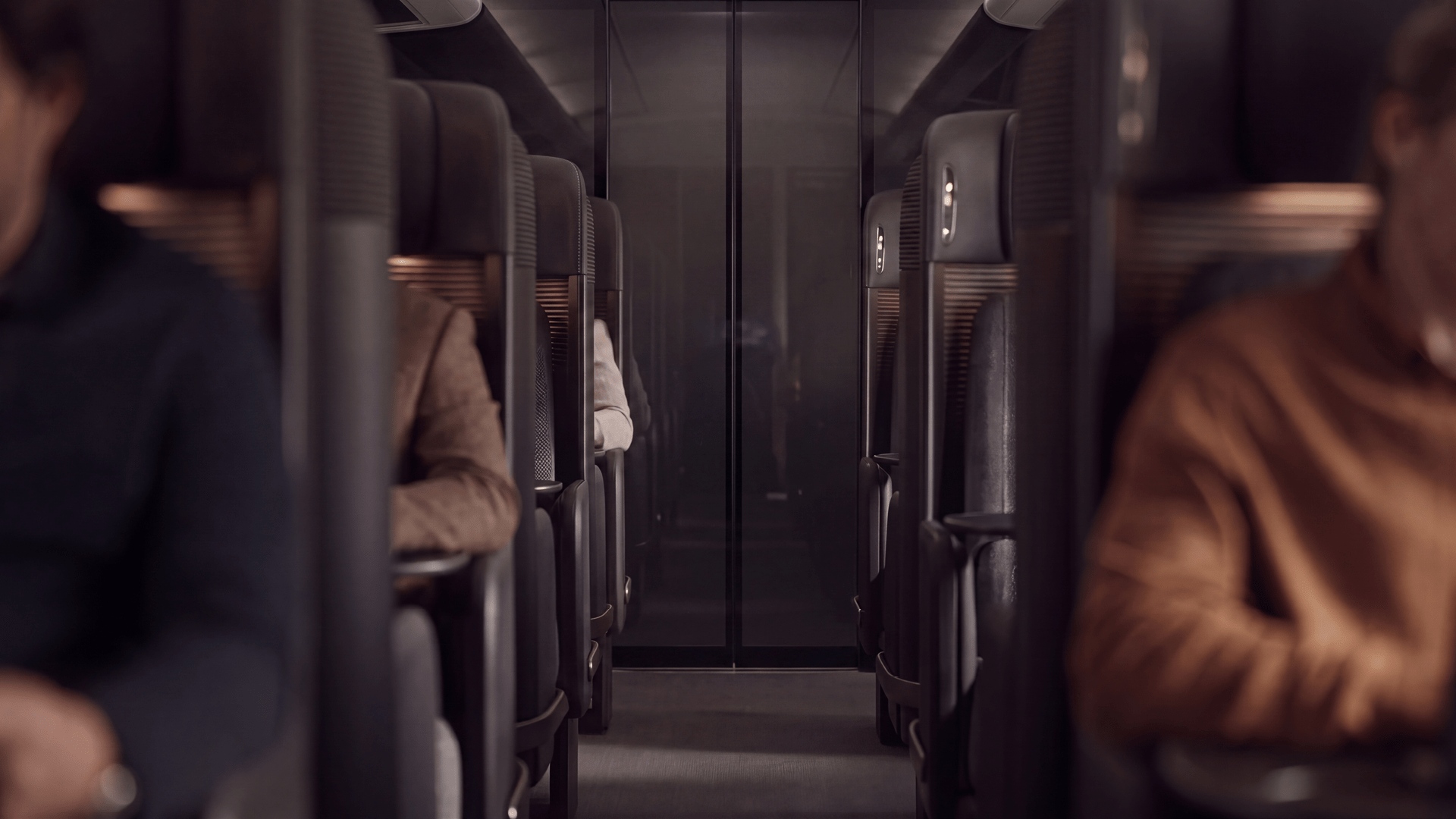
DAY/DREAM reimagines the overnight rail journey, transforming existing European rolling stock from a daytime seating environment into an overnight sleeping experience. Designed across First, Business and Economy, the same carriage serves a different set of passengers by day and by night, without the need for a dedicated sleeper fleet or new vehicle procurement.
Challenge
Overnight rail has the potential to offer a genuine alternative to short-haul aviation, but much of today’s provision is still shaped around the couchette model, where the quality of the journey is largely determined by the class of ticket.
Fixed-configuration rolling stock also limits which routes and journey types can be viably offered. Creating a better overnight experience can mean dedicated sleeper fleets and significant new investment.
DAY/DREAM asks how existing trains could be transformed to serve passengers during the day and overnight, while creating a more considered experience for everyone on board.
Solution
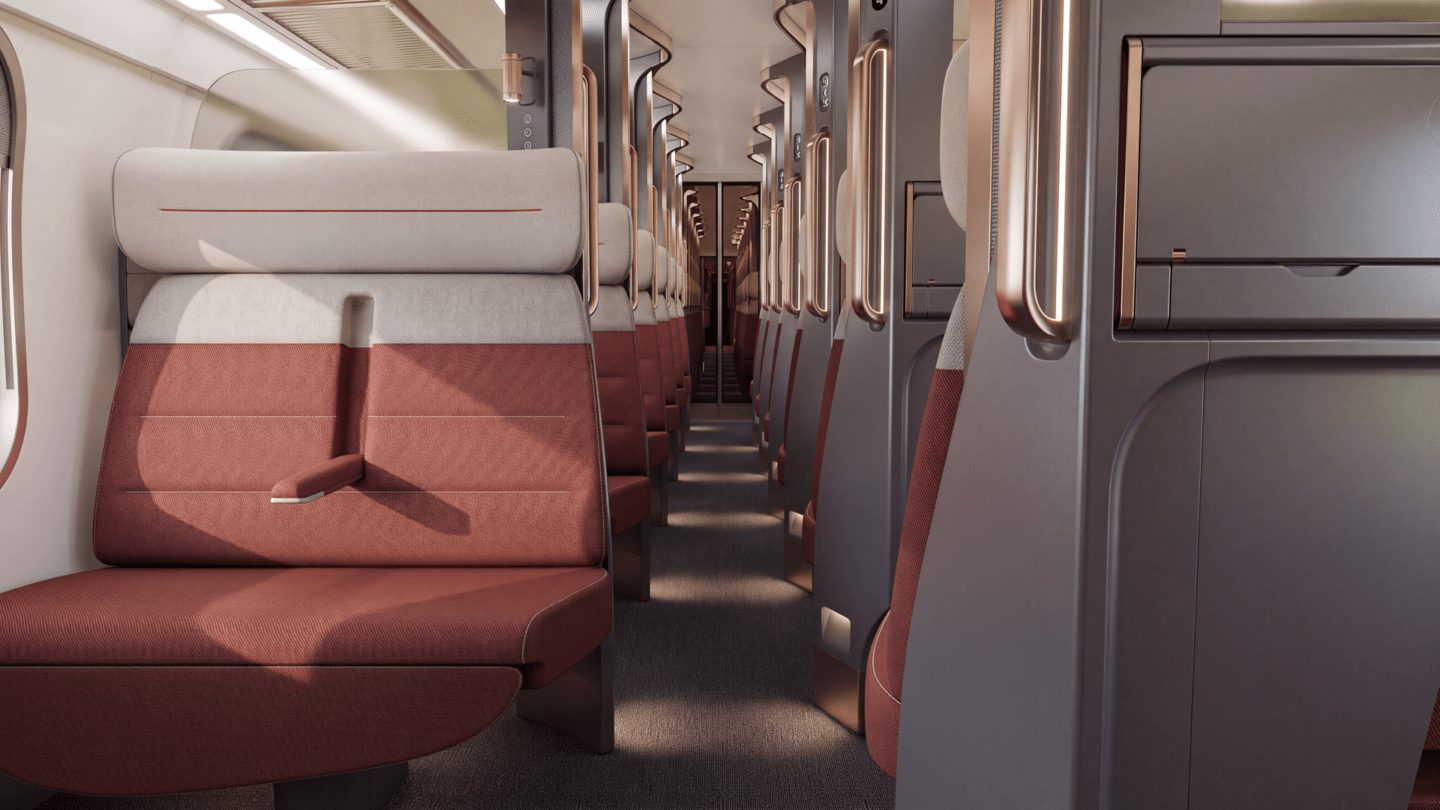
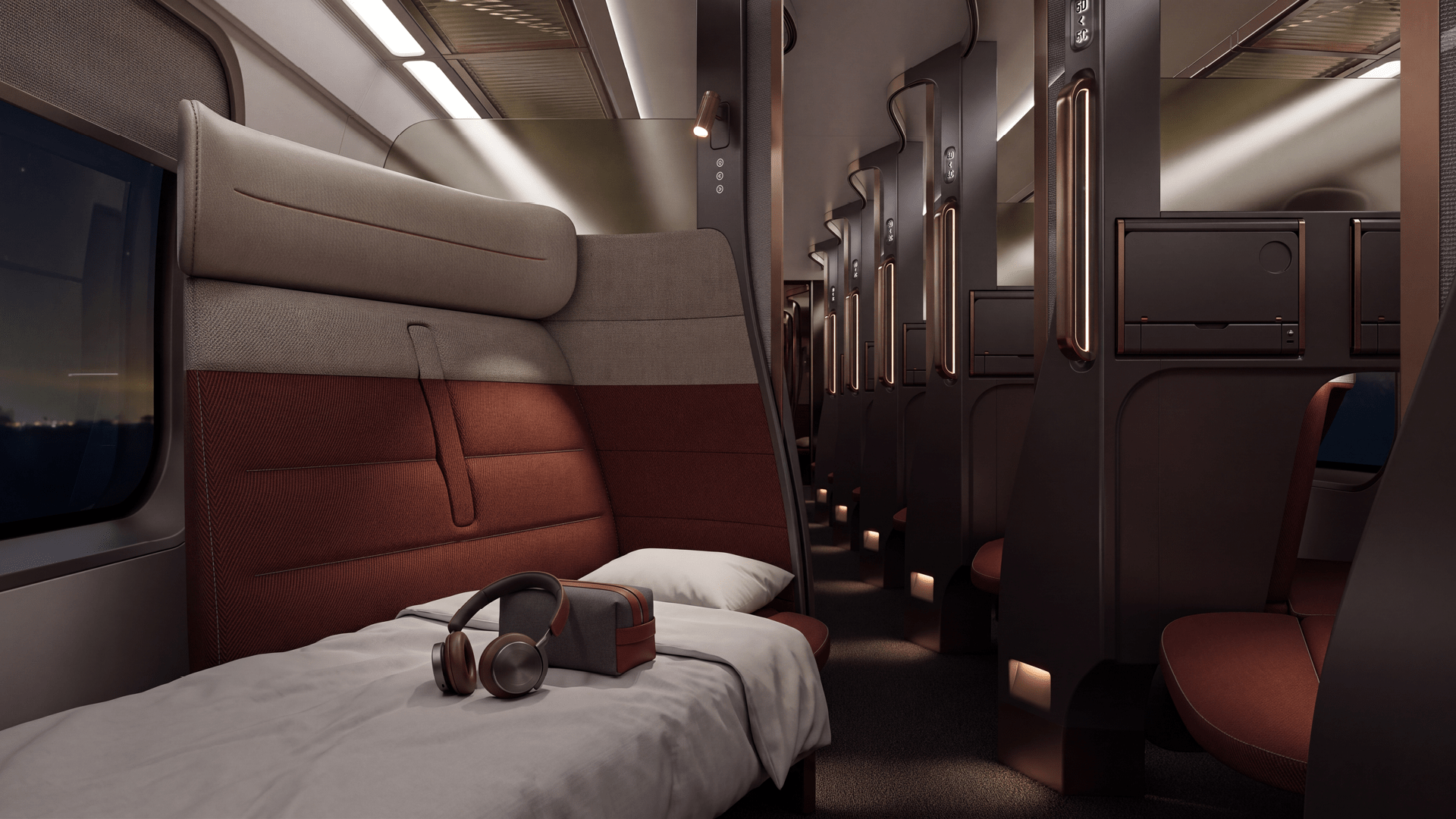
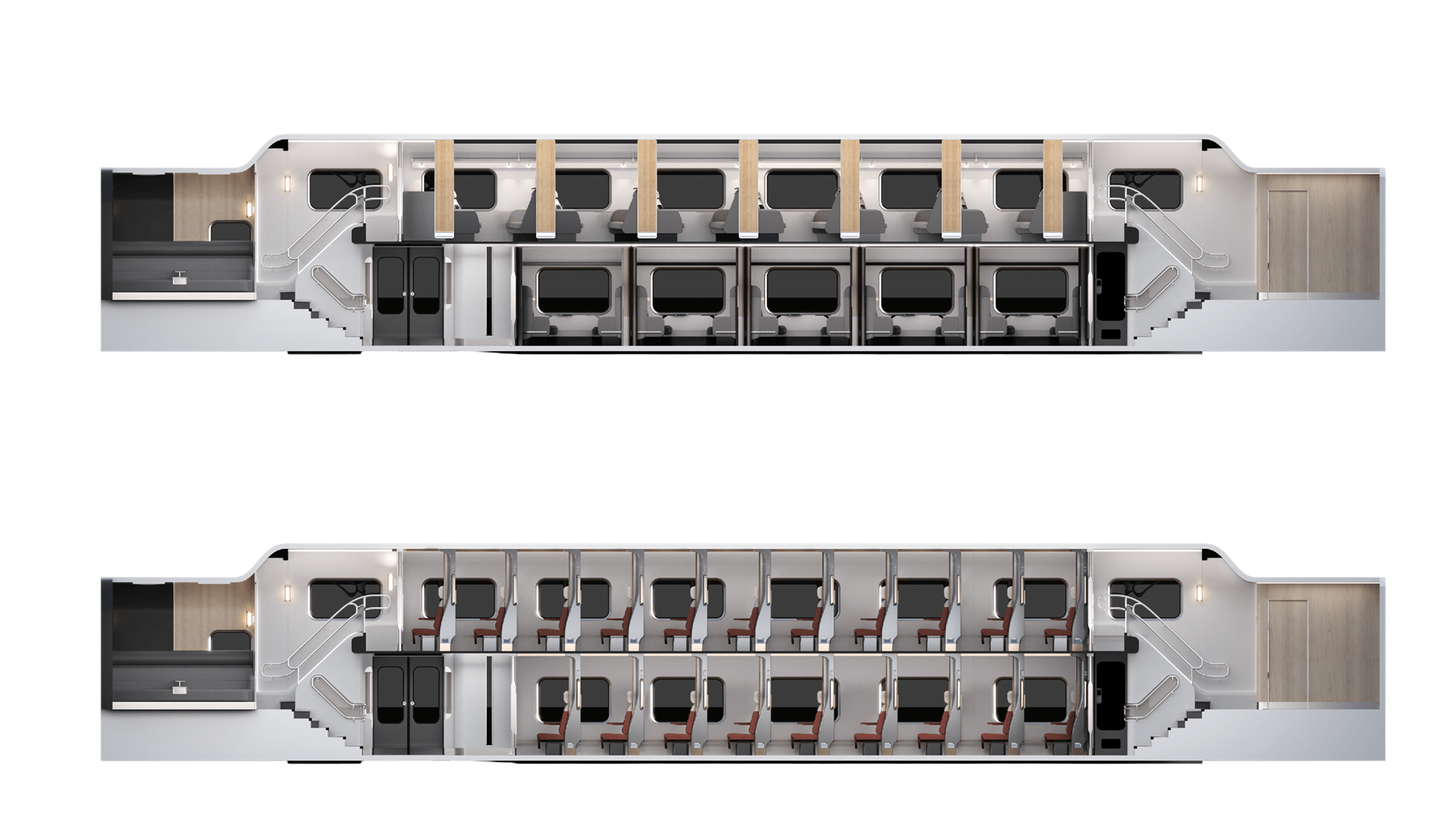
DAY/DREAM reimagines the overnight rail journey by transforming existing European rolling stock from a daytime seating environment into an overnight sleeping experience. The same carriage serves a full complement of daytime passengers before transitioning at night to a separate set of overnight travellers, with a staffed, hospitality-led turndown creating a clear shift between the two modes.
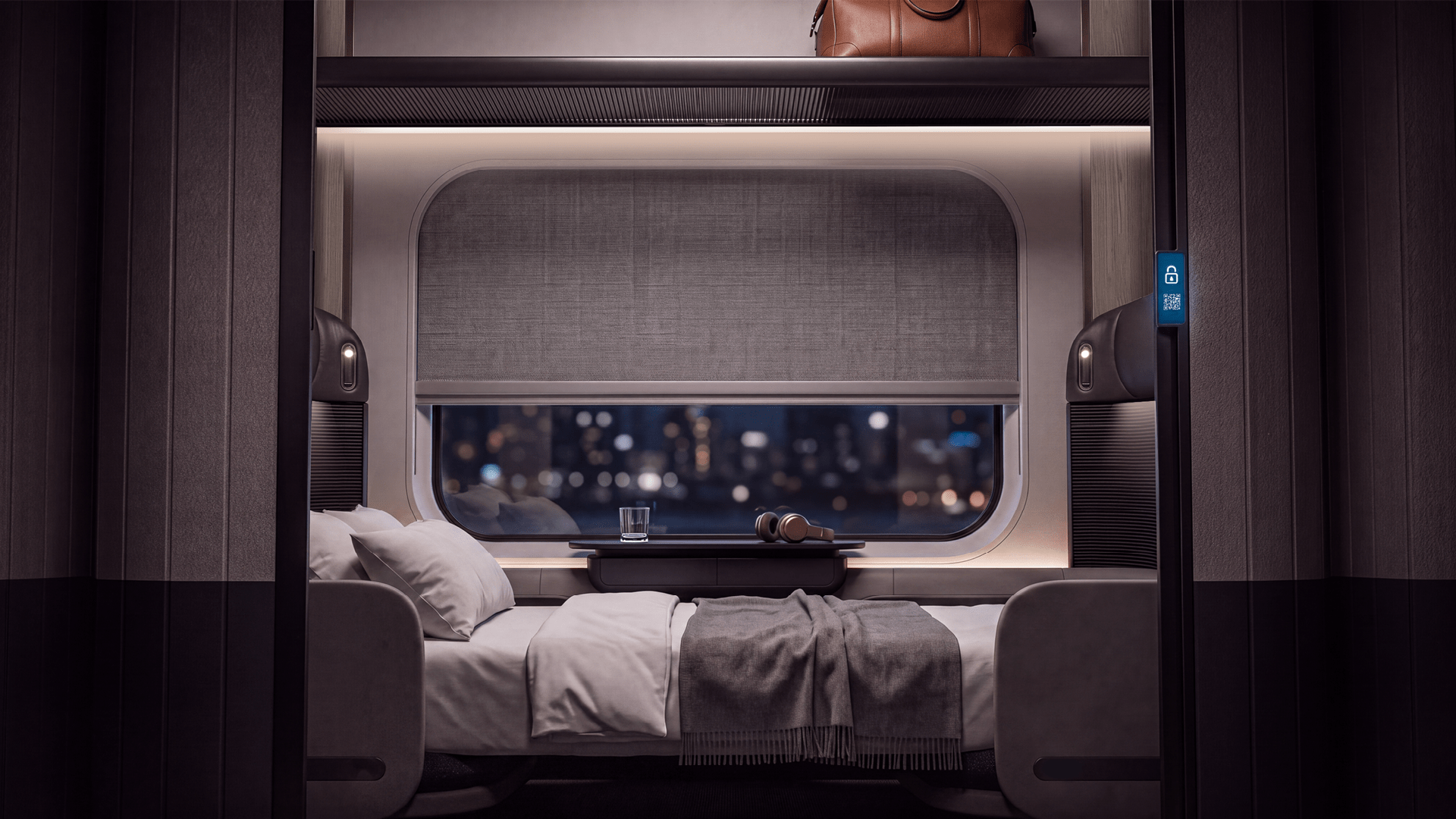
Privacy is built into the overnight configuration. Full-length acoustic curtains create separation within each carriage, creating individual cabins which can be locked and unlocked using a unique QR code linked to the passenger’s device. The result is a sleeping environment that feels considered and personal, rather than a daytime seat simply converted into a bed.
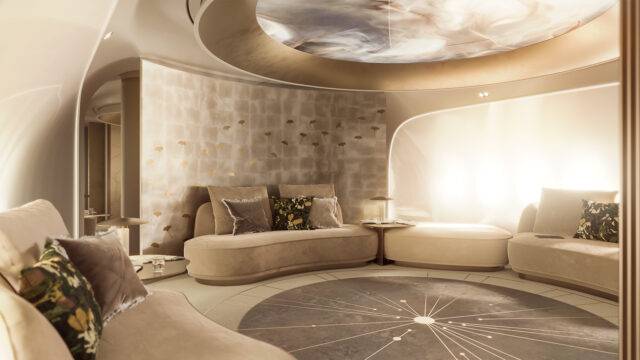
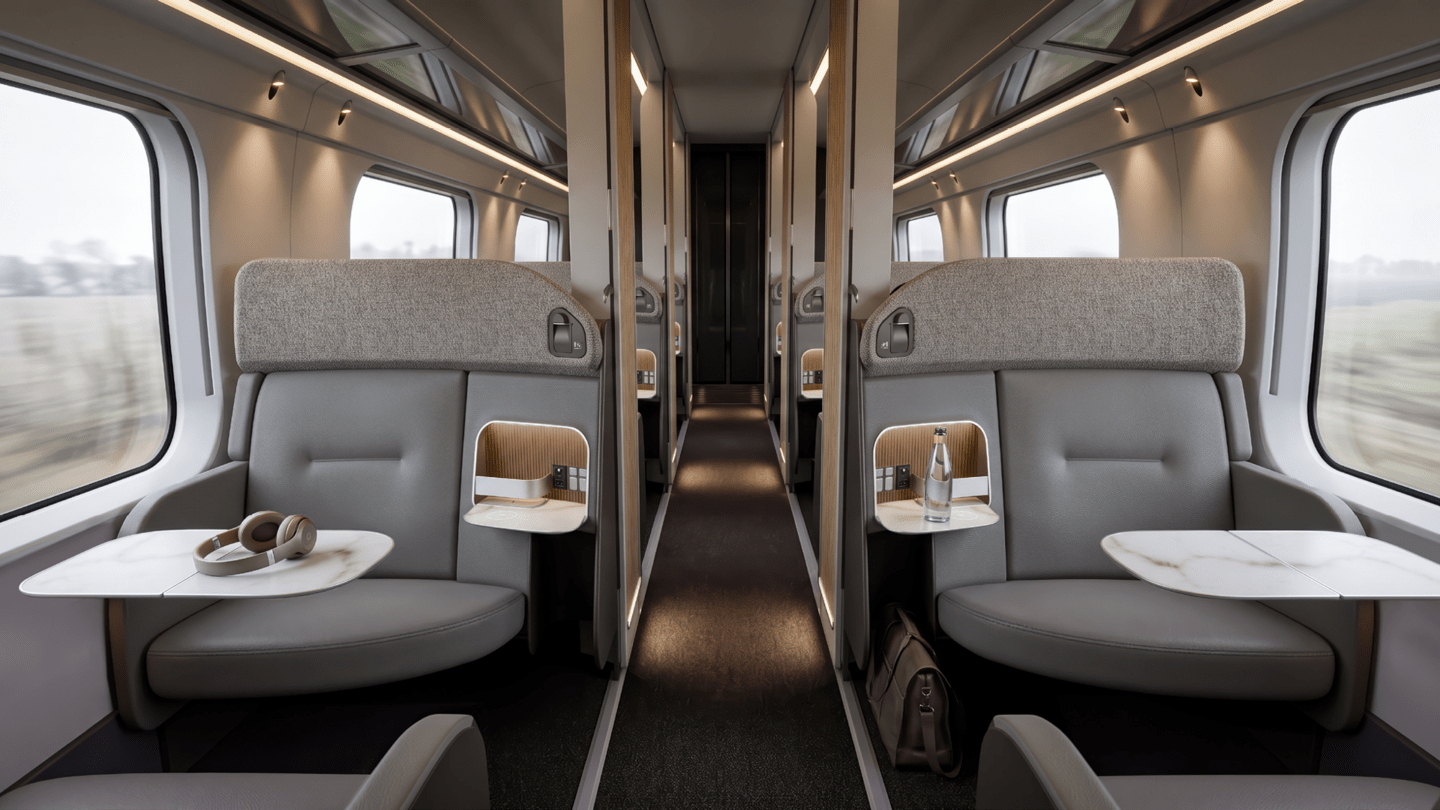
Each carriage is designed as a self-contained environment, with its own entrance, shared lounge and bar area, keeping the experience contained within the carriage and reducing the need for passengers to move up and down the train. The shared spaces give passengers somewhere to work, relax, eat and socialise, while the sleeping areas provide a quieter environment for rest.
Each carriage also contains two shower facilities and toilets, making the overnight experience fully self-contained within the individual carriage.
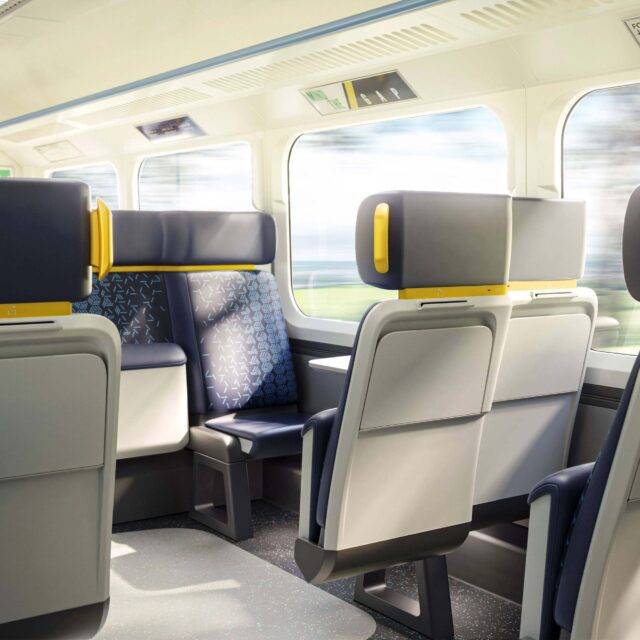
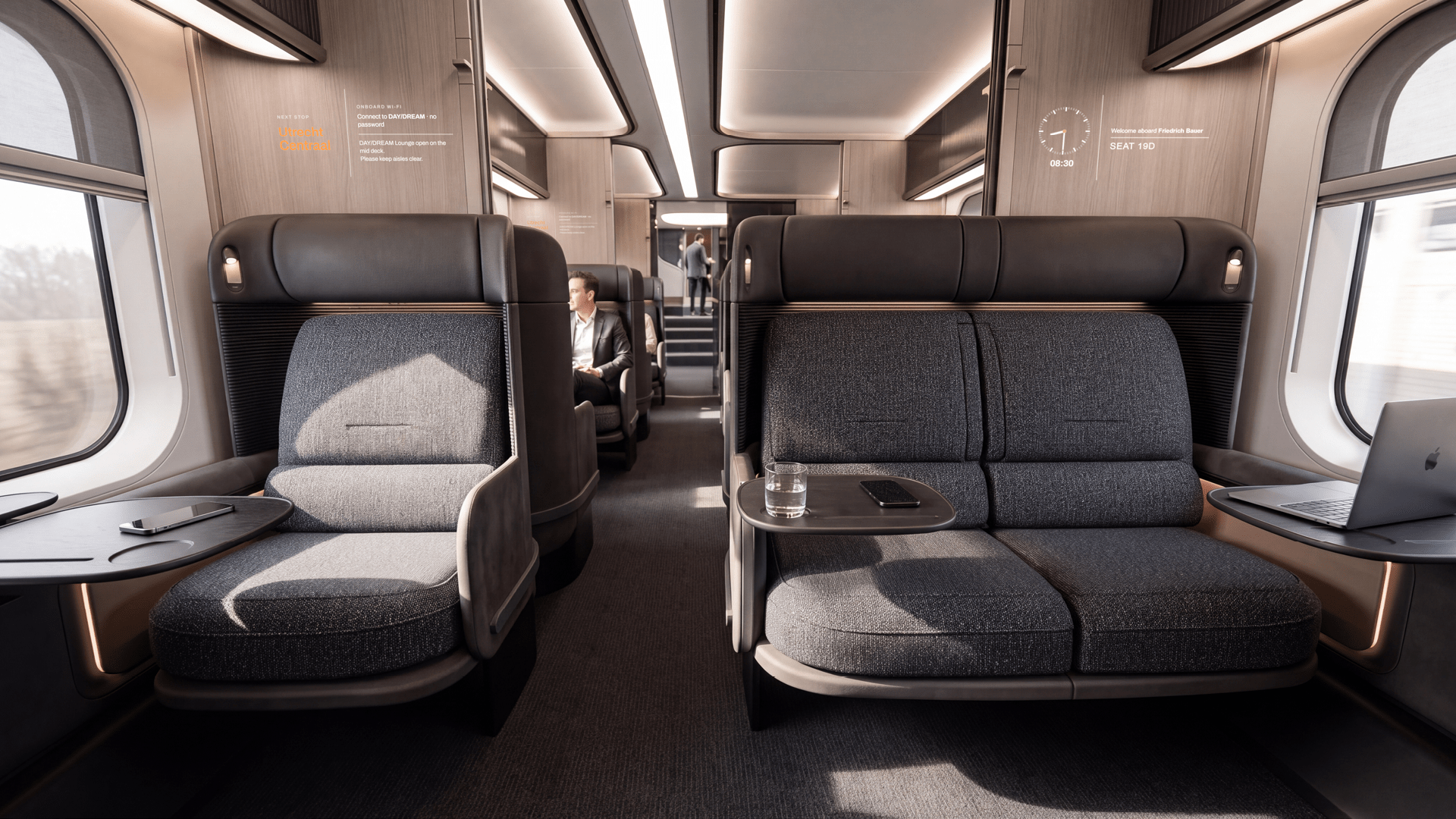
DAY/DREAM deliberately moves away from the traditional couchette model. During the day, the seating environment has a more lounge-like character, designed for work, relaxation, conversation and dining, before transforming at night into dedicated sleeping accommodation.
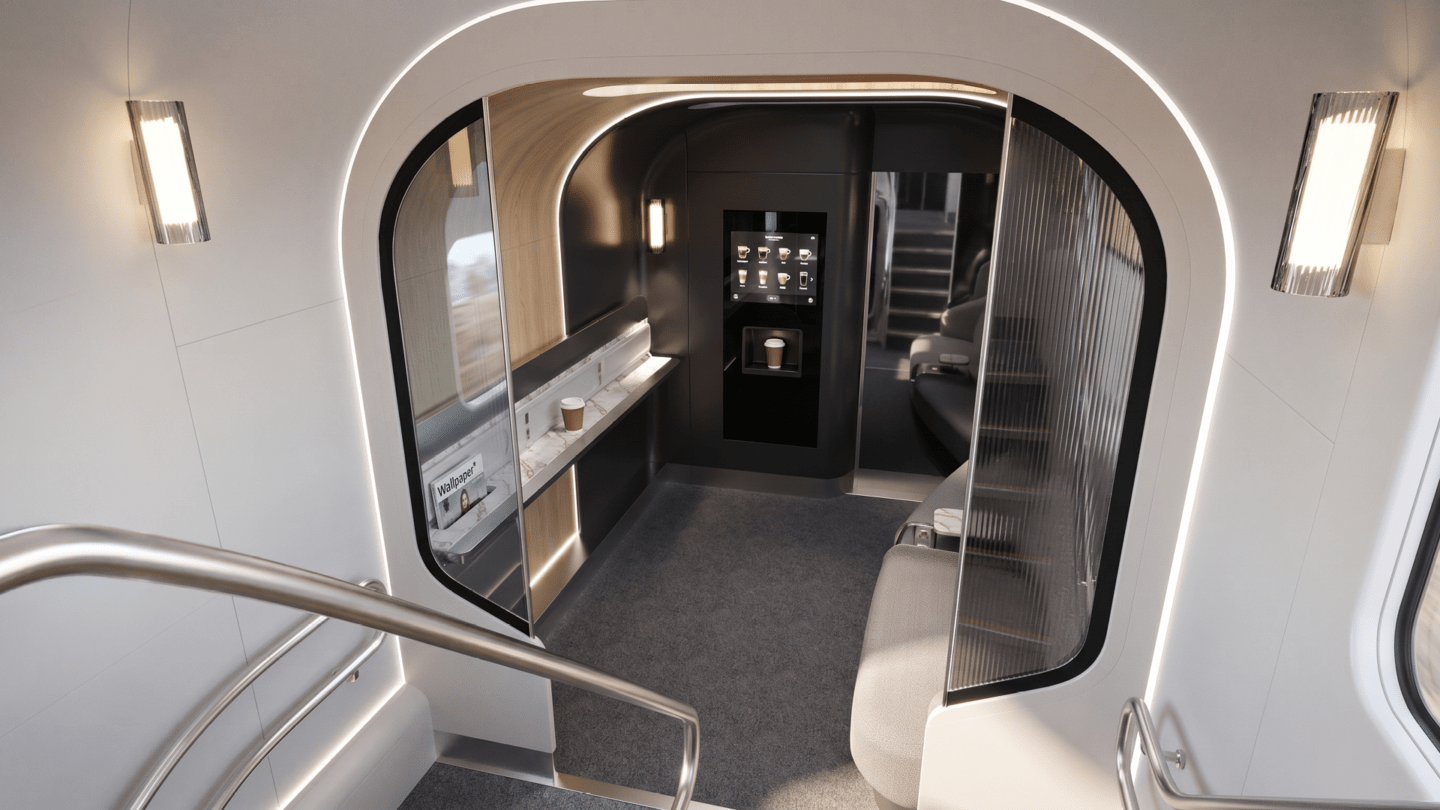
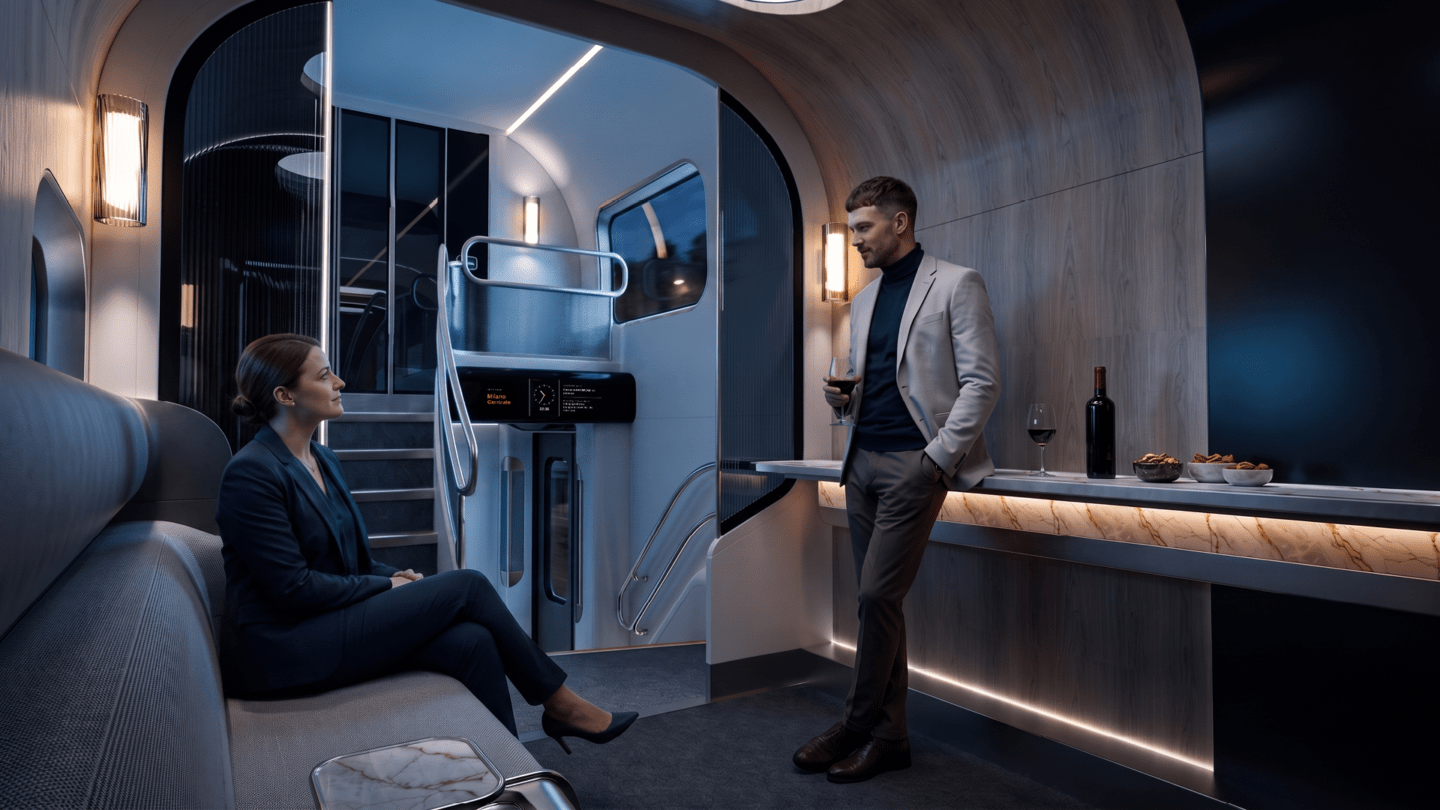
First Class Carriage
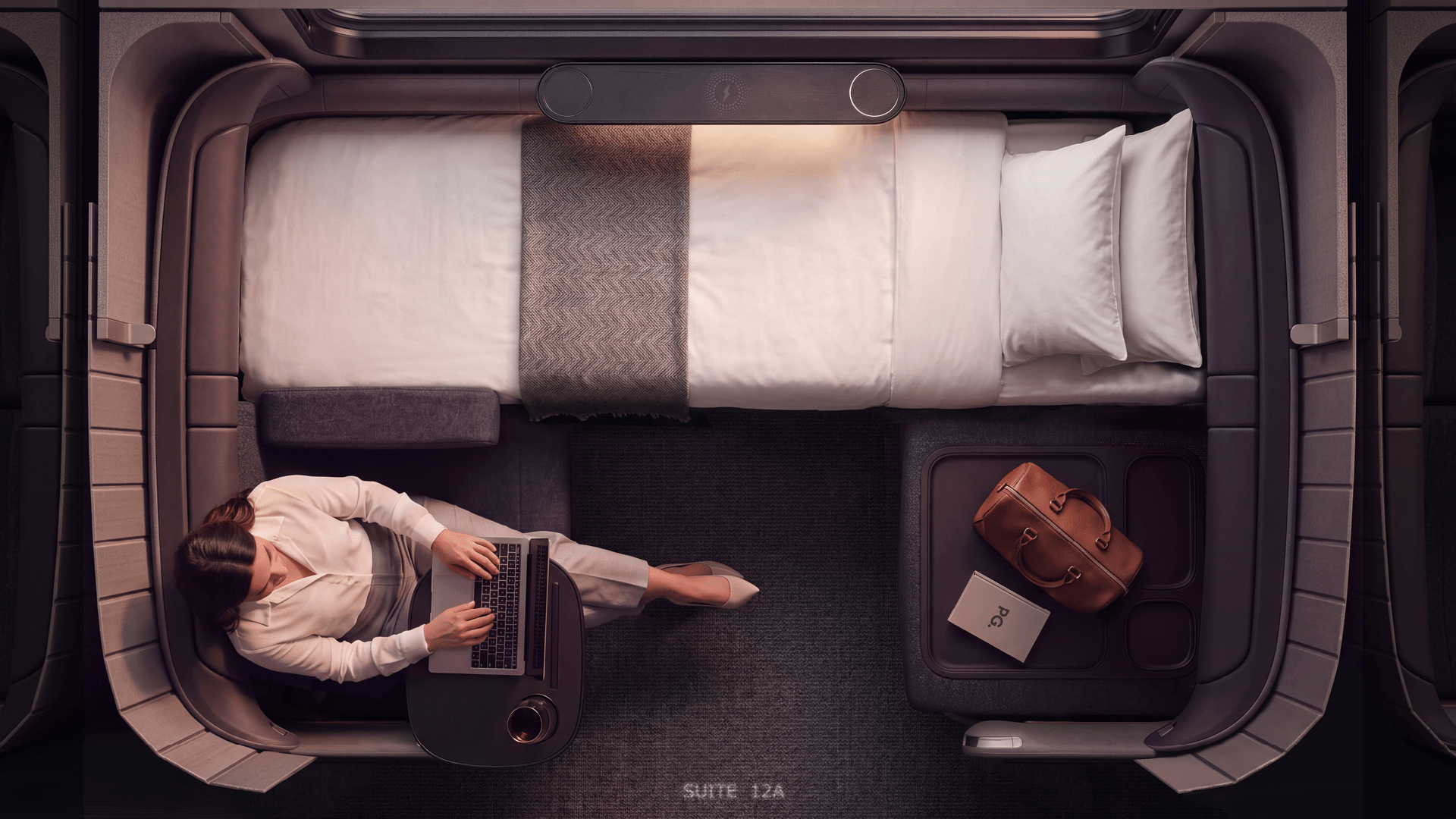
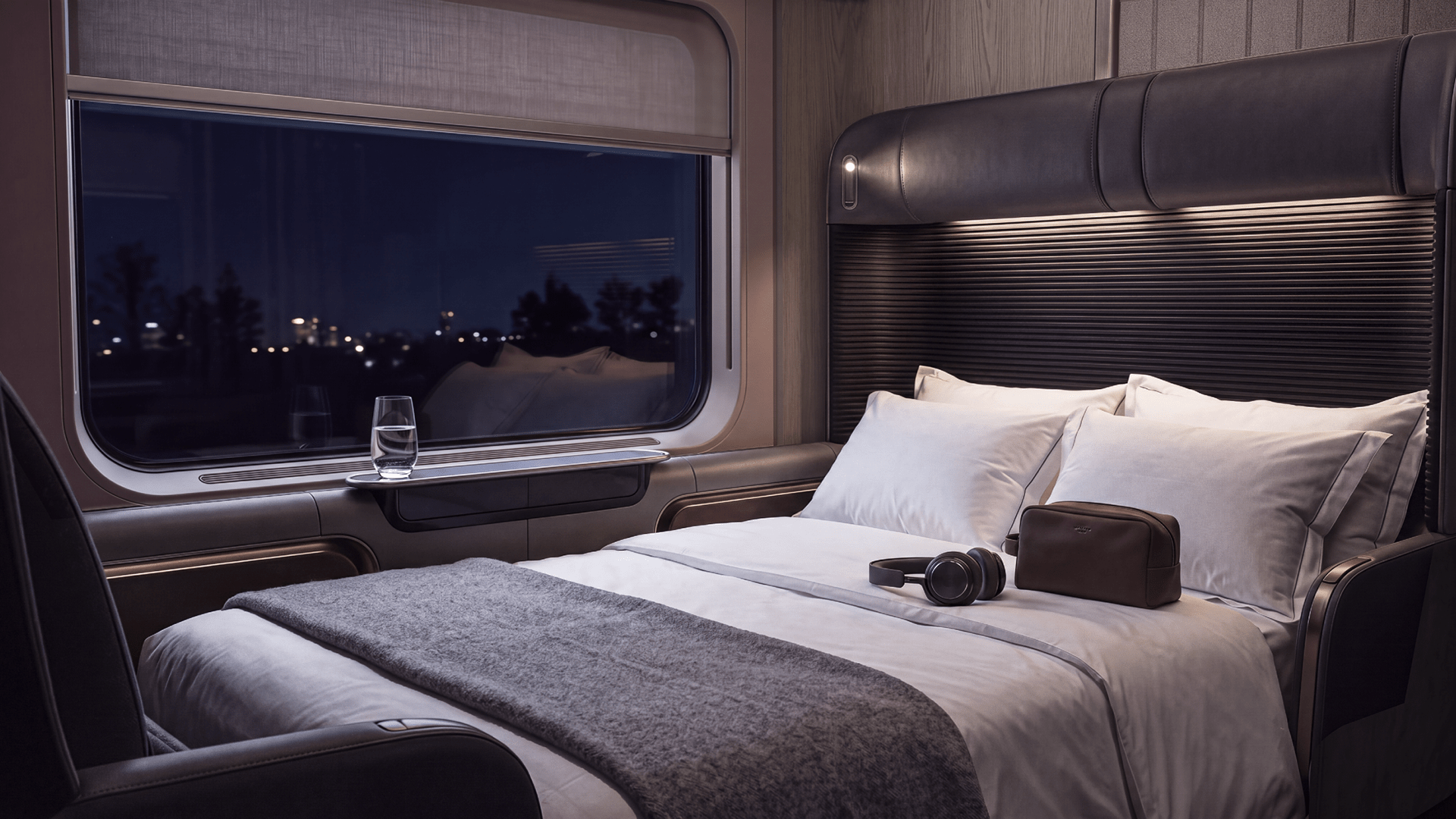
Business Class Carriage
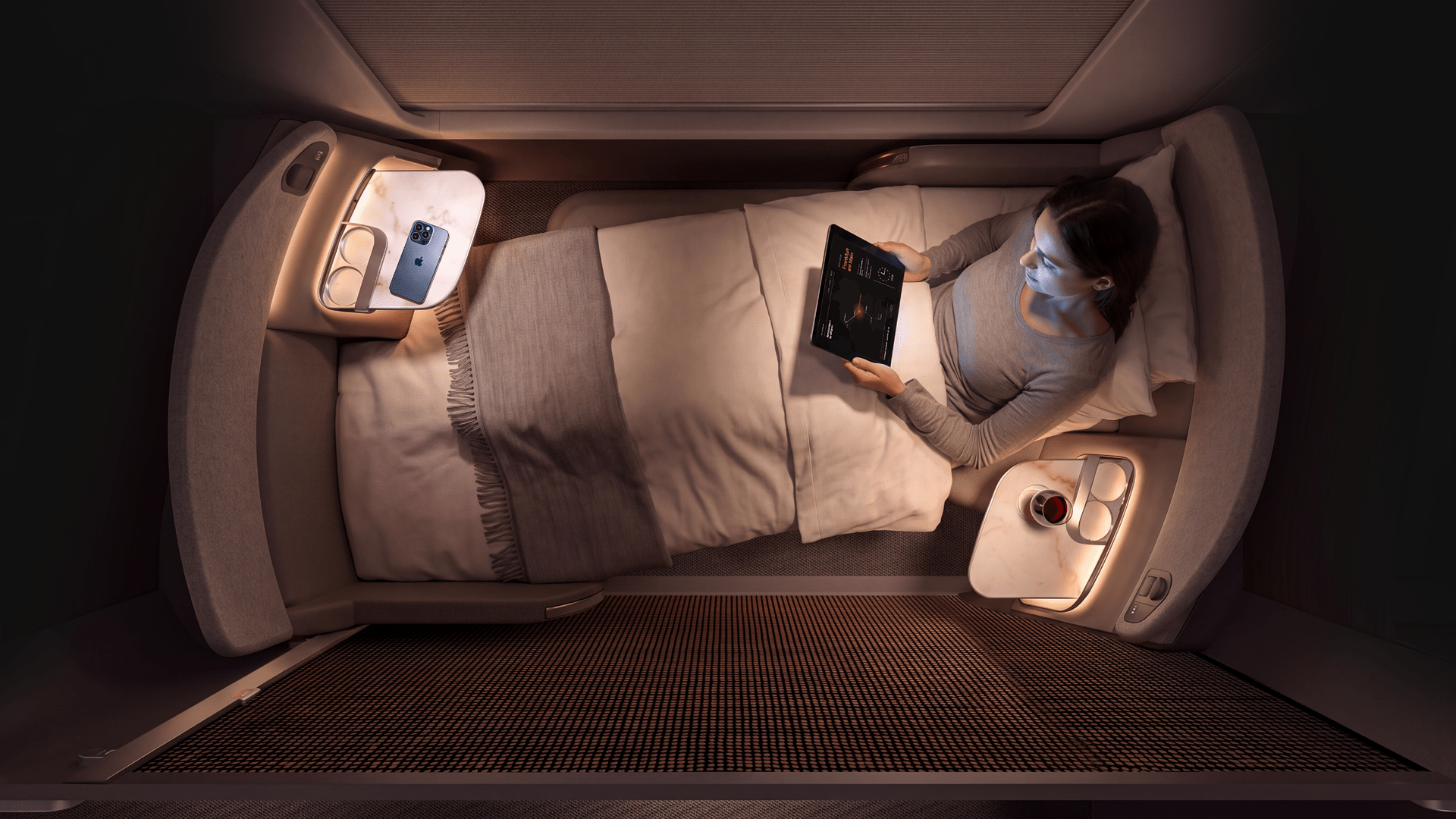
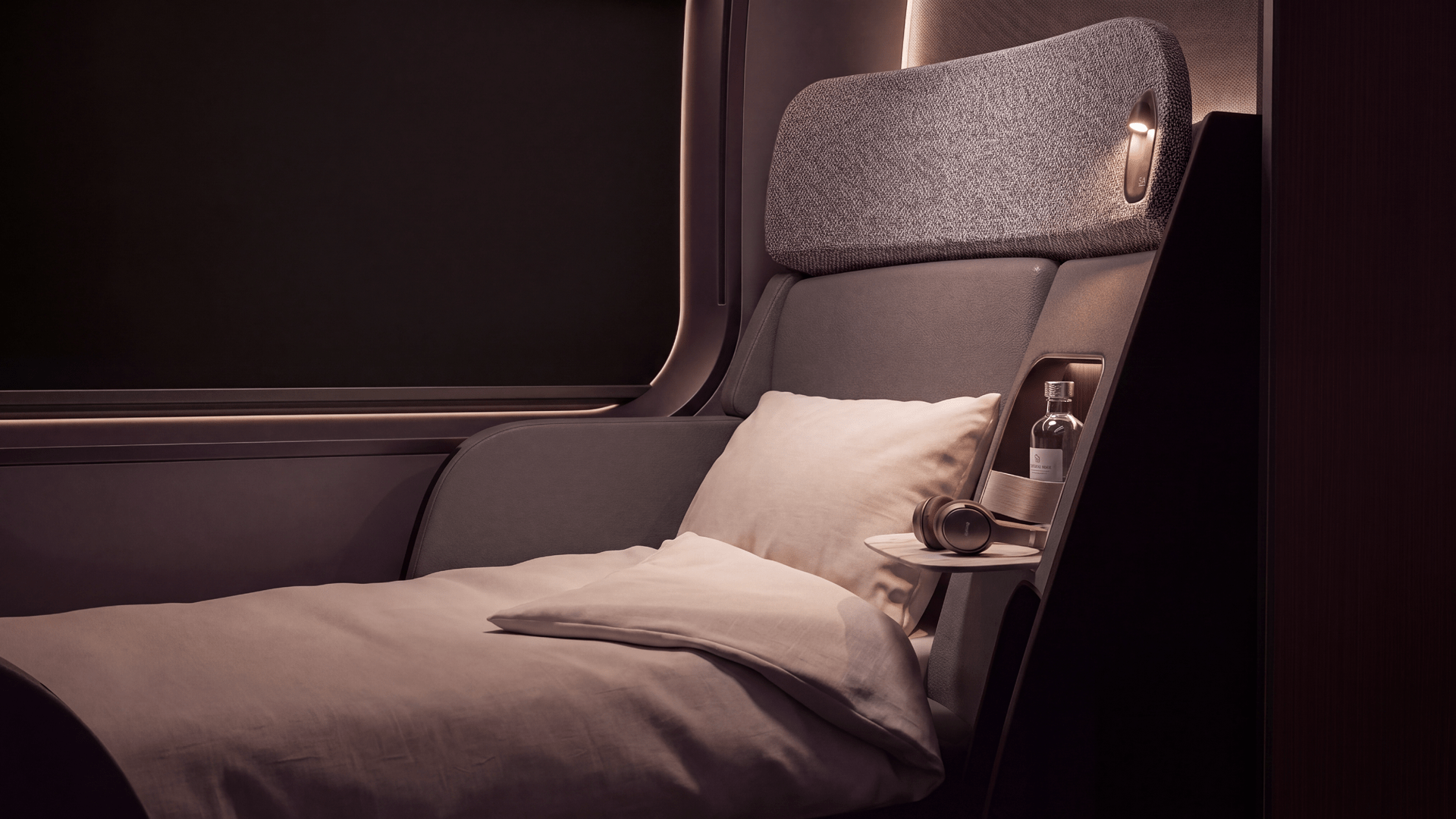
Economy Class Carriage
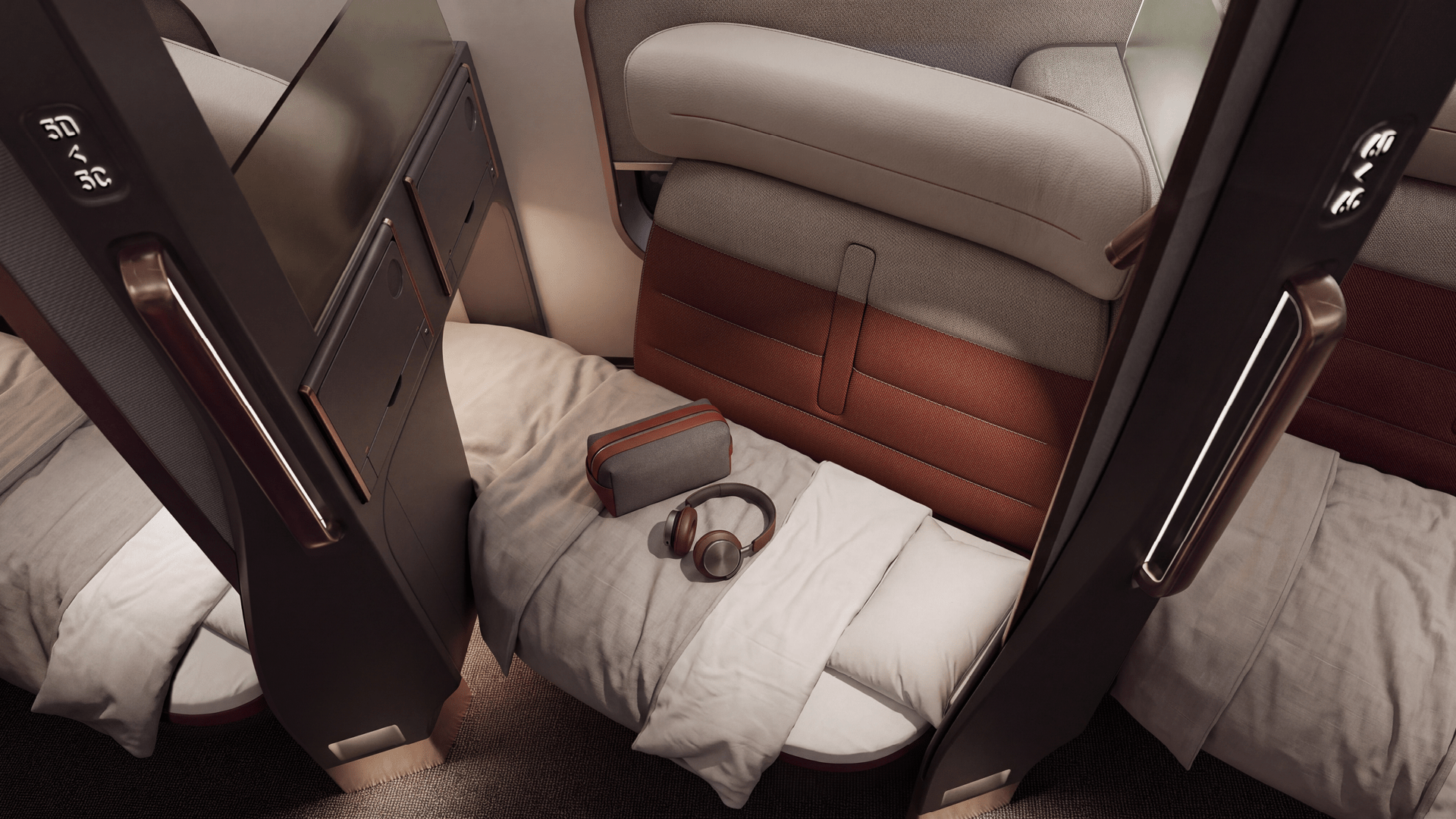
Materials
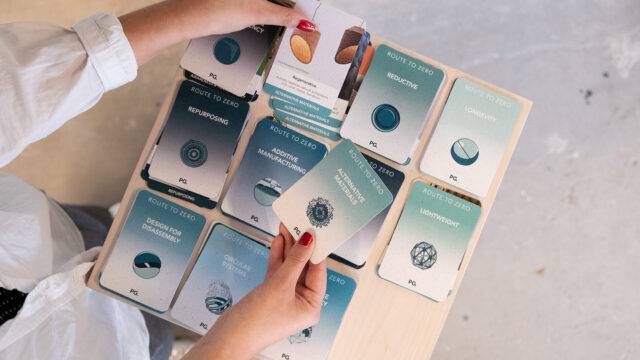
PriestmanGoode worked with three specialist material partners; Muirhead, Kydex and Testori, each contributing materials that are applied across all three classes of the interior: First Class Lounge, Business Class Lounge and Economy, adapting in application and finish as the level of privacy increases.
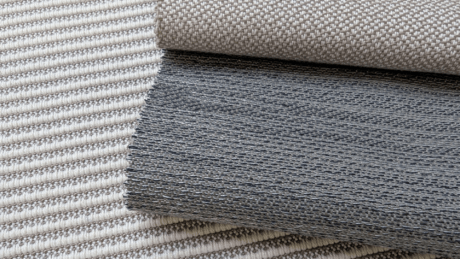 Testori
The vertical surfaces, curtains and headboards are finished in a plant-based fabric from Testori, shortlisted for a Crystal Cabin Award. An 80/20 blend of recycled and raw plant-based cotton, it is engineered to meet fire retardancy requirements without compromising recyclability, and can be broken down and reprocessed cleanly at end of life.
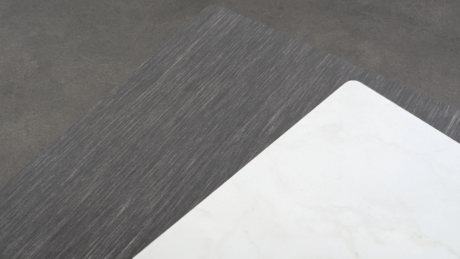 KYDEX
KYDEX
Kydex’s 2210LT image-infused thermoplastic sheet covers the shrouds, tables, seat shells and aisle panels. Durable enough for continuous day-and-night operation, it is finished to read as soft and considered rather than industrial, particularly on the high-wear meal table.
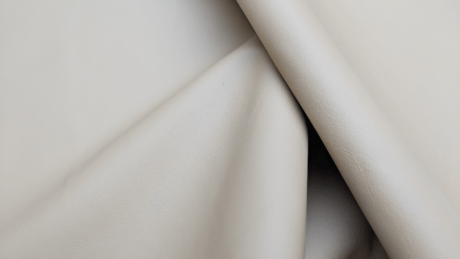 Muirhead
Seating throughout is specified in Muirhead foam and leather, including BioPRO foam for First Class Lounge cushions and BioTAN leather, Muirhead’s chrome-free hybrid-tanning leather, for full seat and headrest applications in Business and Economy. The leather meets EN45545-2 2020 R21 HL3, the fire safety standard for rail interiors.
“Our understanding of how passengers move between different states, working, eating, socialising, resting, across a long journey has been central to how we have approached DAY/DREAM. Designing a space that performs equally well in two distinct operating modes, and transitions smoothly between them, draws on disciplines that are well established in aviation interior design: considered space planning, material performance under continuous operation, and a genuine understanding of passenger psychology at every phase of a journey.”
Kirsty Dias, Managing Director, PriestmanGoode